Category Archives: Reviews

Review: SISU and SISU: Road To Revenge

SISU and SISU: Road to Revenge

Reviewed by Jayson Gallaway on 13 April 2026 .

5 out of 5

SISU and SISU: Road to Revenge: A Double-Barreled Shotgun Blast Straight to the Cerebral Cortex, or, Why I Now Believe in Cinematic Valhalla

Alright, dear reader – lean in close, because this is the part where I confess that I thought SISU (2022, that lean, mean Finnish liver-kick of a picture) was perhaps the best movie ever made, full stop, until the sequel dropped like a thermite grenade and turned my entire goddamn worldview into smoking rubble.  I sat there in my  darkened home theater, jaw unhinged, thinking: this is what would happen if Quentin Tarantino stayed up all night consuming industrial quantities of methamphetamine and schnapps and mainlining the entire John Wick franchise back-to-back with every Mad Max: Road Warrior installment, then watched the sun come up over the wasteland and muttered, “Fuck it, I can do better,” before hammering out a script on a typewriter that probably still smelled like cordite and reindeer blood.  Because hot damn – these movies kick ass.  They don’t just kick it; they stomp it into the permafrost, set it on fire, and then piss on the ashes while humming the Finnish national anthem.

Let’s start with the original SISU, shall we?  Because you have to understand the baseline before the escalation makes your skull crack open.  It’s 1944, the tail end of the Continuation War, Lapland’s frozen hellscape where the Nazis are doing their scorched-earth retreat and the Finns are…well, being Finns: stoic, silent, and apparently carved from the same granite as their goddamn saunas.  Our protagonist – Aatami Korpi, played with wordless, granite-faced magnificence by Jorma Tommila – is a grizzled ex-commando turned prospector who’s just struck gold in the Arctic tundra.  Literally.  He’s out there with his horse, his dog, and a pickaxe, minding his own apocalyptic business, when a detachment of retreating SS troops (led by the impeccably vile Bruno Ganz stand-in type, but really, the whole unit is a rogues’ gallery of pure Teutonic sadism) spots him, decides he’s a partisan or a threat or just something to brutalize for sport, and kicks off the most relentless, inventive, balls-to-the-wall revenge rampage since…well, since ever, really.

What follows is 91 minutes of Aatami systematically disabusing the Third Reich of its sense of invincibility thing, using, in no particular order: a pickaxe, a landmine, a tank, a stolen Messerschmitt, and the sheer Newtonian fact that he refuses to die. Body count: somewhere north of “a lot” and south of “everyone.” He spends the entire film without speaking until the last 90 seconds, when he walks into a Helsinki bank, dumps a satchel of gold on the counter, and says, “Bills. Big ones, please. Won’t be so damn heavy to carry.”

Key badass features, annotated for the discerning psychopath:

  • The Protagonist Hardly Speaks: One line. Total. The rest is communicated via glares, violence, and a dog who has better instincts than most NATO advisors. Silence, in Aatami’s case, is not emptiness. It’s compression.
  • Chapter Titles That Sound Like Heavy Metal Albums: “The Gold,” “The Nazis,” “The Minefield,” and, of course, “Kill ‘Em All.”  Subtlety is for Swiss cinema.
  • Deaths as Invention: A man gets hung by his own noose from a plane. Aatami rides a bomb out of a plane like Slim Pickens with a grudge. He crawls out of a swamp, because of course he does.
  • Feminist Tangent With Tanks: The Nazi truck full of captive Finnish women arms itself, takes a Panzer, and strings a war criminal from the turret. Aino, their de facto leader, is the only character with a higher kill-to-line-of-dialogue ratio than Aatami.

And then…SISU: Road to Revenge (2025): The Escalation, or How to Murder a Buffer State

Plot, now with 40% more Soviets and 200% more vehicular homicide:

It’s two years later.  1946.  The Winter War is over, WWII is over, and Aatami is still over it.  He returns to his old family house in Karelia – now technically USSR because maps are written by men with armies – where his wife and two sons were murdered by Red Army officer Igor Draganov, played by Stephen Lang, who is here to remind you that he was scarier than the Na’vi in Avatar and he’s not done.

Aatami’s plan: dismantle the house, plank by plank, load it on a truck, and rebuild it somewhere in Finland where the ghosts can sleep.  It’s the most Finnish thing you can do – grief as carpentry.

The KGB’s plan, via Richard Brake’s delightfully reptilian officer: spring Draganov from a Siberian prison and give him near-endless resources to kill the legendary ex-soldier by any means necessary.

What follows is not a chase.  A chase implies one party wants to get away.  Aatami wants to go home.  Draganov wants Aatami dead.  The Soviet state, in its infinite wisdom, throws motorcycles, fighter planes, tanks, and a train at the problem.  Aatami responds by igniting a man with his own Molotov, sending another man headfirst through Draganov’s windshield, and continuing not to talk.

Structure: The film is basically Saving Private Ryan fist-fighting Mad Max: Fury Road in a John Wick parking garage.  It has chapters again, because Jalmari Helander understands that you, the viewer, need a breath before the next war crime.  “Motor Mayhem,” “Incoming,” and a train sequence that Buster Keaton would have called “a bit much.”

Climax, spoilers be damned: Aatami kills Igor, avenging his family.  He rebuilds the house with help from the locals, which is the closest this franchise gets to a hug.  The director calls it a “beautiful ending for the story of Aatami Korpi,” but also admits he might do a third if the idea hits.

Key badass features, now in sequel strength:

  1. Still Doesn’t Talk: Still amazing Aatami gets away without speaking at all.  His dialogue is reloading.
  2. Body Count Inflation: Must’ve got to at least 100.  The first film was a massacre.  This is a census adjustment.
  3. Villain Upgrade: Lang’s Draganov is arguably worse than his Avatar character.  He’s the man who created Aatami by murdering his family, which makes their final fight less a duet and more an exorcism.
  4. Pacing as Weapon: R-rated, all over in 90 minutes.  No subplot, no love interest, no TED talk.  Just revenge, compressed until it’s diamond.

Critical consensus: 94% Certified Fresh, 87% audience, same as the first.  The audience understands: you don’t fix what isn’t broken, you just give it more tanks to break.

The Verdict: SISU was the mission statement: a man, a pickaxe, and a grudge.  It was cinema stripped to the studs and rebuilt with barbed wire.  SISU: Road to Revenge is the proof-of-concept scaled up until the I-beams buckle.  It takes the first film’s glorious, wordless brutality and asks, “What if we added a train.”

Together they form a two-film argument that action movies have been too polite for too long.  Aatami Korpi is a force of nature.  He is “sisu” – the Finnish word for the thing that happens when stoicism and spite have a baby and the baby know how to hot-wire a Panzer.  He does not quip.  He does not learn.  He does not die.  He endures, and then he makes everyone else stop enduring.

If you want lore, watch Dune.  If you want monologues, watch Sorkin.  If you want to feel the atavistic, middle-finger thrill of watching a 60-year-old Finn turn the entire Soviet military into a Rube Goldberg machine that outputs corpses, watch these.

I now think cinema is two movies long, and everything else is just trailers.

We ride at dawn.  Bring a pickaxe.

N.P.: “Stick ‘Em Up” – Quarashi

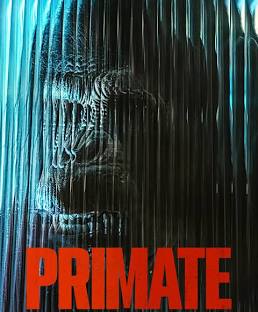
Review: Primate

Primate

Reviewed by Jayson Gallaway on 29 March 2026 .

2.5 out of 5

Someone recently asked me about my “guilty pleasures”…what they are and why.  I suspect they were expecting me to mention some chick flick I secretly adored or a couple of cuts off the Journey’s Greatest Hits album that I couldn’t get enough of, because they seemed a bit surprised/uncomfortable/put-off with my actual response.  Lately, I’ve been deriding inordinate and likely perverse satisfaction from videos of idiots trying to take selfies with and/or pet and/or somehow intimately interact with wild animals/apex predators in the wild or in captivity, doesn’t matter.  These hopeless, phone-addicted dolts who haven’t touched grass in decades who deludedly think the world is here for them to judge and react to on YouTube or Reels so they can have content seem perfectly comfortable – entitled, even – approaching some gigantic beast on its home territory, where its family/pack lives, fully expecting this apex predator to just stand still and passively let some bipedal turd of a person get next to it, put his/her arm around it, and be involuntarily selfied.  And then they are shocked – shocked, dear reader – when they are immediately gored in the groin or bitten in the face.  These videos always seem to have some warning at the top about “graphic” or “violent” content, but I find these warnings childish, ridiculous, and pathetic.  Where others are apparently repulsed, I find great humor.  The truth is that when I watch these vids, I crack the fuck up.  Yesterday I blew a not-insignificant amount of Jack and Coke™ through my nose as I cackled like a bastard as I watched some ignorant ballbag climb into a European zoo enclosure and get brutally and unlubricatedly violated by a whole colony of purple-assed spider monkeys in estrus.  Where others see tragedy and violence, I simply see nature at work…Darwin taking out the trash.

Anyway, I guess I shouldn’t have been surprised when this same person I was talking with about guilty pleasures didn’t seem to interested in watching “Primate” with me.  Which was fine.  They didn’t miss much anyway.

“Primate” is basically a formulaic, trope-allegiant slasher movie, except instead of a homicidal maniac in a hockey mask, we get a rabid chimpanzee.  Which is, for all practical purposes, the same thing.

The movie opens with a very promising (albeit brief) foreshadowing of the aforementioned rabid chimp ripping a veterinarian’s face off.  Then, as per our usual arrangement with slasher tropes, we switch to a group of overly attractive, clueless, airheaded, entitled teens going home to Hawaii.  They’re not returning from a vacation in paradise – no – they already live there.  And not in some tropical hovel or hut…nope…a modern mansion at the edge of a ridiculous cliff, with an infinity pool going right to the edge of said cliff, which cliff then immediately drops off about 1000 feet directly into the Pacific.  Two minutes into this film and I cannot wait for Mr. Chimp to rip every one of these cast members limb from limb.

Things proceed predictably, which isn’t the worst thing, but some opportunities are missed.  But one can only have so many expectations of a movie about a rabid chimpanzee, I suppose.  I think the biggest disappointment for yrs. truly is that the screenwriter’s/filmmaker’s weakening of the chimp for the sake of a few scenes and plot points.  Here’s what I mean: an adult male chimpanzee is 4 to 6 times stronger than a human of the same size.  That means that a chimp’s strength is equivalent to that of 5 adult men.  So, if the chimp in “Primate” (he’s named Ben) – if Ben was truly rabid and on a killing spree, he would annihilate everyone within reach without exerting any serious effort.  Toward the end of the movie, there are several physical fights between various humans and Ben the rabid chimpanzee.  These are depicted as these sort of blow-by-blow, punch-counterpunch brawls that are disappointingly unrealistic.  At one point, Ben back-hands a teenage girl that weighs about 90lbs hard across the face.  In reality, this would decapitate the girl.  Instead, she just gets knocked down, not even losing consciousness.  Lame.

In another scene near the end of the movie, Ben gets ahold of the keys to an SUV the “final girl” is hiding in.  She locks the doors – Ben uses the fob to unlock the doors.  I guess the filmmakers want us to be impressed by how smart Ben is, being able to use a remote control, but in reality, Ben could easily rip the door completely off of the SUV and disembowel Lucy in one, fluid motion, and Lucy has a good disemboweling coming for the entire movie.

Which is the film’s real sin, if we’re being honest: it wants credit for being clever while refusing to commit to the one honest premise it has, namely that a chimpanzee is not a man in a rubber mask but a compact, tendon-laced meat-grinder with the bite force of a crocodile’s impatient cousin and the social temperament of a drunk uncle who just lost his pension.  The script keeps pulling its punches, or rather pulling Ben’s punches, because the producers apparently decided that an hour and twenty minutes of insipid teenagers getting turned into wet confetti would be “too mean.”¹  Too mean for whom, exactly?  The audience that bought tickets to watch a movie called “Primate”?  Shee-it.

There is, however, one sequence – mid-film, right after the inevitable poolside ketamine-and-White Claw montage – where the movie briefly remembers what it is.  Ben, still damp from chewing through the vet’s mandible in the cold open, slips into the house through the floor-to-ceiling glass that some architect with a death wish installed six inches from the infinity pool.  The kids are doing what kids in these things always do: they are filming each other, they are narrating their own lives in the third person, they are mistaking volume for charisma.  Ben does not monologue.  He does not stalk.  He locomotes, which is polite way of saying he moves like a cannonball made of muscle and bad intentions.  He grabs the golden retriever-looking boyfriend (his name is either Chase or Bryce; the distinction is purely ornamental), lifts him by the throat with one hand, and uses the other to peel the kid’s jaw sideways off his skull like it’s the lid on a can of tennis balls.  The sound design here – credit where it’s due – is fantastic: a wet, fibrous rip that lands somewhere between celery and a phonebook.  For thirty seconds “Primate” is exactly the movie it should have been: mean, fast, uninterested in your feelings about it.

Then it apologizes.²

It apologizes by giving Lucy – the designated Final Girl, who wears her trauma like a tasteful necklace and keeps repeating “we have to stay together” in the tone of someone who has read exactly one article about group survival – the aforementioned SUV to hide in, and by letting her wind a shoving match with Ben over the center console.  She kicks him.  He recoils.  She screams.  He looks confused.  Confused!  A rabid chimpanzee, an animal whose entire evolutionary resume is “rip, tear, dominate,” is written as if he’s just been told his favorite band broke up.  The camera lingers on his eyes, big and wet, while sad piano dribbles in, and for a moment you can feel the film begging you to consider Ben’s interiority.  Fuck that.  If you wanted interiority you should have case human.  You cast a chimp (sure, a human named Miguel Torres Umba in a chimp suit) so you could watch him turn a poolside cabana into a Jackson Pollock made of viscera.  Own it.

The teens, as a unit, are assembled from the same factory that produces reality-TV contestants and vape-shop employees: symmetrical faces, asymmetrical morals, zero impulse control.  They speak in a patois that is 60% acronym, 30% upspeak, 10% genuine confusion about what year it is.  Their dialogue is the kind of recursive self-reference that makes you want to diagram the sentence on a whiteboard just to prove it doesn’t mean anything: “Like, literally, I can’t even, like, literally can’t.”  Ben, to his credit, doesn’t give a shit.  He kills two of them by accident while trying to get to a bag of Flamin’ Hot Cheetos that someone left on the counter.  Okay…he doesn’t…he would have if I had written this ridiculousness, which would have been the only honest product placement to happen all year.

By the time the third act rolls around – sunset, cliff, infinity pool turning pink with blood and hibiscus petals – “Primate” has settled into the rhythm of every other slasher: false scares, a monologue (in sign language) from the adult authority figure who arrives late and should have died faster, and a final confrontation that is supposed to feel cathartic and instead feels like a negotiated settlement.  Lucy, bloodied but still camera-ready, chucks been off a deck.  One of the table’s thick, jagged legs punch through his chest and abdomen like a dull spears.  He hangs there for a beat, impaled, eyes wide, hands twitching at the wood as if he could negotiate with it.  Lucy just stares, breathing through her mouth, while Ben makes a noise that is not a roar and not a whimper but something in between, a wet exhale that sounds like air leaving a punctured tire.  He dies.  Blah blah blah.

So do I recommend it?  Sure, in the same way I recommend watching those selfie clips: not because it’s good, but because there’s a particular, feral pleasure in watching entitlement meet consequence and lose.  Just don’t expect “Primate” to have the courage of its own premise.  It wants to be nasty, but it keeps flinching.  It wants to be a parable, but it can’t decide whether the moral is “don’t build houses on cliffs” or “don’t underestimate primates.”  In the end it’s a middling slasher with an inspired casting choice, a few glorious seconds of honest carnage, and a whole lot of nervous hedging.  Watch it with the sound up, the lights down, and a drink you can afford to snort through your nose when Ben finally – briefly – gets to be the animal he is.

¹ Which is rich, coming from a studio whose last three releases were all subtitled variations on “People Get Murdered In A House.”

² The apology is structural: the film cuts away from the aftermath of the jaw-peel to a slow-motion flashback of Ben as a baby, bottle-fed by the vet whose face he will later remove. It’s supposed to humanize. It humanizes the way a taxidermist humanizes a deer.

N.P.: “Guns/Steel” – Metal Scar Radio, Hybrid

Review: Ghost’s Skeletour 2026

Ghost: Skeletour 2026

Reviewed by Jayson Gallaway on 21 February 2026 .

5 out of 5

Due to an unexpected ticket from an unexpected and well-connected friend, I was in attendance at the latest stop on Ghost’s Skeletour 2026 last night, February 20, where the Nameless Ghouls and Papa V Perpetua turned what could have been just another large-room rock show into something approaching a genuine, sweat-soaked, incense-heavy liturgical experience that left me grinning like an idiot for hours afterward and still feeling faintly buzzed the next morning.

The set was a beautifully calibrated thing, opening with the slow-burn grandeur of “Peacefield” that immediately set the tone for the whole evening – those opening chords hitting like a velvet hammer – and then rolling straight into “Lachryma,” which felt sharper and more vicious live than on the record, the whole arena seeming to lean in as the riffs thickened.  From there it was a masterclass in dynamics: the brooding pomp of “Spirit,” the anthemic life of “Faith,” “Call Me Little Sunshine” turning into this massive, sing-along catharsis that had even the most stoic floor-section types swaying like they were at some inverted revival meeting.  “The Future Is a Foreign Land” landed with real emotional weight, “Devil Church” brought the theatrical instrumental weirdness, “Cirice” absolutely crushed with its slow-build menace, and “Darkness at the Heart of My Love” was an amazing mixture of haunting and tenderness.  The whole two-hour set felt like it had actual narrative arc rather than just a string of bangers.  Here’s the full setlist:

  • Peacefield
  • Lachryma
  • Spirit
  • Per Aspera ad Inferi
  • Faith
  • Call Me Little Sunshine
  • The Future Is a Foreign Land
  • Cirice
  • Devil Church
  • Darkness at the Heart of My Love
  • Satanized
  • Satan Prayer
  • Umbra
  • Year Zero
  • He Is
  • Rats
  • Kiss the Go‑Goat
  • Mummy Dust
  • Monstrance Clock
  • Mary on a Cross
  • Dance Macabre
  • Square Hammer

But listen, dear reader – none of that, not even the pyro, the robes, the masks, the sheer sonic immensity of the Ghouls locked in and delivering, would have mattered half as much if the place had been the usual sea of uplifted rectangles that has turned so many arena shows into a kind of collective digital documentation project instead of a shared, in-the-moment ritual.  And here’s the part where I have to say, with genuine, almost embarrassing enthusiasm: Ghost’s decision to enforce a phone-lock policy (those little Yondr pouches handed out at entry, sealed tight, phones trapped until you hit the exit) was the single biggest factor in making the night transcendent rather than merely very good.

For the past twenty years or so, my default stance toward big-venue rock has been one of low-grade disgust bordering on refusal: the spectacle of tens of thousands of people paying premium prices to stand elbow-to-elbow watching a performance through the two-inch screen they’re holding aloft at arm’s length, half-trying to film it, half-trying to live it, but mostly succeeding at neither.  The result is always this weirdly depersonalized event where everyone’s simultaneously present and absent, recording proof-of-attendance instead of actually attending, and the band ends up playing to a forest of tiny glowing screens rather than to faces.  It’s exhausting, it’s tragic, it’s the opposite of what live music is supposed to be about.

Last night, though?  None of that.  The policy was standard – phones locked away, small bags screened, no sneaking – yet the execution felt almost revolutionary in its simplicity and effectiveness.  And crucially, they didn’t just lock you down and leave you there; they had designated “cell phone use” zones out on the patios, little outdoor holding pens where you could step outside, get your device unlocked by staff, doomscroll or text or whatever for a song or two, then re-lock and return.  It was smooth, it was civilized, it was – dare I say – almost elegant in how un-intrusive it managed to be while still solving the problem.  No one seemed pissed about it; people just adapted, and the result was an audience that was actually watching the show, eyes up, bodies moving, voices raised in unison instead of thumbs poised for the record button.

I can’t overstate how much that changed everything.  The energy in the room was feral and focused and communal in a way arena gigs almost never are anymore.  You could feel the collective attention sharpen during the quiet moments, swell during the choruses, crest when the lights hit just right.  No forest of phones meant no visual distraction, no low-level resentment bubbling under the surface, no sense that half the crowd was more interested in content than experience.  It was just…people, together, losing their minds to music that demands to be felt in real time.


So yeah: this Skeletour stop was the best large-scale rock show I’ve seen in decades, not just because Ghost were firing on all cylinders (they were), but because the band and venue together managed to strip away the single most annoying, soul-deadening element of modern arena concerts and let the ritual breathe.  If every big act adopted this approach tomorrow, I’d start going to more of them again without hesitation.  As it stands, I’m still riding the high, replaying “Lachryma” in my head, and quietly plotting how to finagle tickets to whatever they do next.  Ghost didn’t just put on a phenomenal concert—they restored my faith in the live music experience itself.

N.P.: “Faith” – Ghost

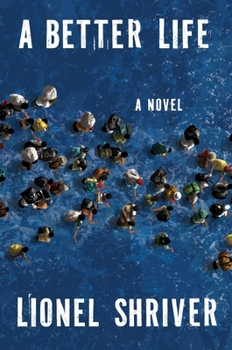
Review – A Better Life by Lionel Shriver

A Better Life

Reviewed by Jayson Gallaway on 3 February 2026 .

5 out of 5

A Better Life
Lionel Shriver
Harper, February 2026
(304 pages of unfiltered badassery)

Straight up, dear reader, I love this book.  Something finally that has the balls to ask all the seemingly unasked questions this rotten culture has been dodging since the borders started bleeding sympathy and the headlines turned into a perpetual guilt trip.

You know that moment when the polite liberal dinner party – candles flickering, everyone nodding along to the gospel of compassion while secretly calculating the equity in their house perched on “stolen” land – you know that moment when someone finally says the quiet part out loud, the part about how maybe, just maybe, inviting the whole world into your foyer isn’t an act of saintliness but a slow-motion home invasion dressed up in humanitarian drag?  Lionel Shriver doesn’t just say it…she loads it into a cannon, lights the fuse with a grin, and blows the whole goddamn table to kingdom come.  And then she rebuilds the rubble into a mirror, forcing you to stare at your own complicit reflection.

A Better Life is the novel we’ve been waiting for since the first cargo plane full of South American illegals touched down in 2022 and the talking heads started competing to see who could furrow their brow the deepest while explaining why borders are just lines on a map drawn by evil white men.  Shriver, one of my favorite contrarians, a walking provocation in sensible shoes, takes the premise – an actual proposal (never implemented, thank Christ) from New York’s idiot mayor to pay citizens $110 a day to billet asylum seekers in their own homes – and turns it into a domestic siege thriller that reads like a paranoid yuppie fever dream crossed with the sharpest satire since American Psycho decided to get political, turning her character Gloria’s sprawling Queen Anne in Ditmas Park into a bloated, creaking metaphor for the United States itself: a once-grand edifice, built on borrowed glory, now sagging under the weight of its own open-door illusions, rooms filling with strangers while the original inhabitants squabble over the thermostat and pretend everything’s fine.

I’m getting ahead of myself here.  So assuming my dear reader hasn’t read it yet:

Gloria Bonaventura, 62, freshly divorced from a husband who bolted for greener pastures (or maybe just a condo without drafts), flush with this inherited pile that’s more liability than legacy – she decides she’s going to Do The Right Thing.  Signs up for Big Apple, Big Heart (the program’s actual Orwellian moniker – Shriver doesn’t invent: she transcribes), and welcomes Martine Salgado, Honduran, soft-spoken, saintly-eyed, into the house.  Martine is helpful.  Martine is grateful.  Martine cooks pupusas that make Gloria’s mouth water and her conscience sing.  Martine charms Gloria’s adult daughters, all childless themselves, drifting through their forties and fifties like ghosts in the machine of delayed adulthood: one a corporate drone too busy climbing ladders to procreate, another an artist chasing grants instead of legacy, the third a perpetual grad student pondering the ethics of reproduction in a warming world.  They’re all barren branches on the family tree, a subtle Shriver jab at how the West’s fertility drought leaves us wide open to demographic takeovers, our houses – and nations – echoing with the footsteps of others’ offspring.

And then there’s Nico, Gloria’s 26-year-old son, the basement-dwelling slacker with a philosophy degree gathering dust and a vape habit that’s his only reliable companion.  Nico smells the rat from day one, but here’s the genius twist: he can’t quite articulate why.  It’s not racism…it’s this gnawing, inchoate dread, a confusion that manifests in stammered objections and half-formed rants about “boundaries” and “sustainability” that Gloria waves off as millennial entitlement.  Nico paces the halls, watching Martine’s brother Domingo show up unannounced, then Domingo’s “associates,” then a cousin or two, the house swelling like a balloon about to pop.  He senses the wrongness – the way goodwill curdles into obligation, how one act of kindness metastasizes into a full-scale occupation – but every time he tries to voice it, it comes out muddled, drowned in Gloria’s platitudes about empathy and shared humanity.  It’s Shriver’s cruelest cut: Nico’s impotence mirrors our own cultural paralysis, where calling out the erosion feels like shouting into a void lined with accusations of bigotry.

What follows is a masterclass in escalation, plot twisting like a knife in the brainstem.  Martine’s sob story about kidnapped children back home, a $30,000 ransom demanded by shadowy cartels.  Gloria’s frantic scramble to wire money she doesn’t have, dipping into retirement funds while her house (the metaphor ramps up here) starts to resemble America writ small: porous borders (that unlocked back door), overburdened resources (the fridge emptying faster than it fills), cultural clashes (Domingo’s crew blasting reggaeton while Gloria’s classical records gather dust), and a host of uninvited guests who arrive with needs that multiply like unchecked deficits.  The daughters pop in, coo over the “diversity,” then vanish back to their sterile apartments, leaving Gloria to foot the bill.  Nico tries to rally, but his warnings fall flat – too vague, too hesitant, too afraid of sounding like the villain in his own story.

Shriver’s immigration themes aren’t preached as much as they are vivisected.  She leans hard into the paralysis of her characters, especially Gloria’s fatal flaw: her inability – or unwillingness – to actually do anything to stop the unraveling.  Gloria could call the authorities, could draw a line, could say “enough” when the living room turns into a dormitory and the utilities spike like a national debt crisis.  But she doesn’t.  Why?  Because that would make her the bad guy, the one who turns away the huddled masses.  Shriver skewers this with surgical glee: it’s the liberal elite’s Achilles’ heel, this ridiculous addiction to moral vanity, where virtue-signaling trumps self-preservation.  The house-as-America metaphor hits peak resonance as the foundation cracks – literally, in one scene where an overloaded beam groans under the weight – symbolizing how unchecked influx strains infrastructure, dilutes identity, and leaves the hosts depleted, their own progeny absence or ineffective.  Shriver doesn’t demonize the migrants; Martine and her kin are survivors, opportunists in a Darwinian game, playing the system because the system invited them to.  The tragedy is in the hosts’ complicity, their failure to act until the locks are changed from the inside.

In an era when every novel about immigration either weeps piously or screams nativist slogans, A Better Life does something rarer: it laughs while the house burns down, then hands you the matches and asks if you’d like to roast something over the flames.  It exposes the hypocrisy of open borders from the comfort of gated communities, the way good intentions pave the road to domestic apocalypse, and how our collective Nico-like confusion – knowing something’s off but choking on the words – dooms us to watch it all unfold.

This is a book that will make people throw it across the room, then pick it up again because  they have to know how far she’ll push it.  It’s cruel, it’s funny, it’s terrifyingly smart.  It’s Lionel Shriver saying, once again, that reality doesn’t give a shit about your feelings, and neither does she.

Buy it.  Read it.  Argue about it in bars until someone punches someone else.  Then read it again, and wonder why your own house feels a little less secure.

Five stars, no footnotes required.  Though it I were forced to append one, it would be: finally, someone had the balls to write the ending we all knew was coming, where inaction is the real invasion.

N.P.: “Immigrant Song” – Super Sonic Temple

Review: The Greasy Strangler

The Greasy Strangler

Reviewed by Jayson Gallaway on 28 July 2025 .

3 out of 5

Watching The Greasy Strangler is like being locked in a sauna with a deranged performance artist who’s determined to make you laugh, cry, and question your life choices—all while slathered in a thick coat of Crisco. It’s not just a movie; it’s a goddamn endurance test.  It’s a test of your mental fortitude, your gag reflex, and your ability to embrace the truly bizarre. And in the weirdest ways, it might be a masterpiece.  It’s a 93-minute assault on your senses, your dignity, and your ability to keep a straight face while watching a grown man slather himself in Crisco and murder people, then step into an almost violent carwash whilst totally nude to clean up after the fact.  It’s like if John Waters and David Lynch decided to make a baby and then left that baby to be raised by Troma Entertainment.   And I’ve gotta say, I loved every ridiculous second of it.

The  plot, such that it is, kicks off with Big Ronnie and his son, Big Brayden, who live together in an awful suburban hovel, in their underwear, introduced as Disco Walking Tour guides who wear matching pink turtlenecks and show their customers local landmarks that were significant in the history of disco (these landmarks are all fictional, seemingly made up on the spot by Big Ronnie).  Big Ronnie and Big Brayden share an extremely unhealthy relationship, and an even unhealthier diet.  If the phrase “Would you like some grease with that?” ever needed a visual representation, this is it.

The oily affair begins when Big Ronnie, who has an unexplained proclivity for getting slicker than a used car salesman at a water park, claims to be the titular Greasy Strangler, to which Brayden responds by accusing his father of being a “bullshit artist.”  [Accusations of bullshit artistry are a recurring theme in this movie).  Ronnie goes from zero to greasy faster than you can say, “two thousand bottles of baby oil.”  After dousing himself in the oleaginous ooze, Ronnie strangles the life out of anyone unlucky enough to cross his slippery path.

At this point, it’s probably worth mentioning the soundtrack: it is weird as fuck, thus making it perfect for this movie.  The soundtrack was composed by Andrew Hung, a renowned British musician, and was released on October 7, 2016.  It is this reviewer’s opinion that Andrew Hung, however lovely a person he might be, should be shot in the balls for crimes against musicality.  That said, it must also be admitted that Andrew Hung has had vastly more success in composing music than the reviewer has, prompting the question, “What the fuck does Jayson know about soundtrack composition wince he hasn’t sold a single CD?”  Which is a perfectly reasonable question that I cannot reasonably answer.  But I’m the one writing this review and would gladly debate anybody about the nightmarish and perverse qualities of this soundtrack.

Some notable tracks from the soundtrack include, “Brightly Coloured Pills,” “Get on the Greasy,” Go Home to My Bed,” “Gulp!,” “You Didn’t List, Oh No,” and “Amulet.”

It’s worth noting that the LP edition was limited to 1000 copies.  It’s also worth noting that Andrew Hung’s compositions for the film have been praised by various musical perverts for their originality and fitting accompaniment to the film’s eccentric narrative.  And so much for that.  Now, back to the plot.

Quick cut to Big Ronnie and Brayden meeting up with the poor participants of their Disco Walking Tour.  Big Ronnie points to a random doorway claiming it was in this very doorway that the Bee Gees wrote the lyrics to “Night Fever.”  The walking tourists immediately get into a series of skeptical arguments about the veracity of Big Ronnie’s disco claims, and the absolute necessity of free drinks.

It’s this last bit that warrants further attention and, perhaps, deeper analysis: for my money, it might be the best scene in the movie.  The scene unfolds when one of the disco tourists, a man with a thick accent, repeatedly interrupts to demand the free drinks that were promised in the tour’s promotional material.  His insistence grows increasingly desperate, and the repetition of “Free drinks!  Free drinks!” quickly becomes a mantra of absurdity for the whole group.  Of course, in true Greasy Strangler fashion, the scene takes the mundane frustration of unmet expectations and cranks it up to eleven, turning it into a grotesque spectacle of awkwardness and absurdity.

Big Ronnie, naturally, responds with his trademark blend of disdain and delusion, dismissing the tourists’ complaints with the wave of his greasy hands.  The whole exchange is a masterclass in anti-humor, where the joke isn’t in the punchline but in the sheer, unrelenting weirdness of the situation.  And it makes me cackle.

Meanwhile, Big Brayden, the not-so-mini-me, falls for the bespectacled Janet, whose taste in men is as questionable as the food hygiene in the Ronnie household. And things just get weirder from there.

This far into the review, and I fear I’m not doing the in-depth analysis of this hour and a half of absurdity.  First, let’s dissect our greasy duo.  Big Ronnie is what you’d get if Colonel Sanders went on a bender with the Marquis de Sade at a lube factory.  The guy’s a walking heart attack, a grotesque lothario who thinks “seduction” involves grinding his hips and repeatedly whispering sweet nothings like “hootie tottie disco cutie.”  Big Brayden is pretty much Napoleon Dynamite got trapped in a vat of Vaseline.  He’s a man-child in the most literal sense, with an Oedipal complex that Freud would need a chainsaw to cut through.  Together, they’re like the Laurel and Hardy of sleaze – if Laurel and Hardy were prone to naked choke-outs and disco-drenched debauchery.

The performances are…well, they’re performances.  Michael St. Michaels as Big Ronnie is a revelation, a man so committed to his role that you can almost smell the grease through the screen.  Sky Elobar as Big Brayden is equally unhinged, delivering lines with the kind of deadpan sincerity that makes you wonder if he’s in on the joke or if he’s just as confused as the rest of us.  And then there’s Elizabeth De Razzo as Janet, the love interest caught in the middle of this greasy love triangle, who deserves some kind of award for keeping a straight face throughout her scenes.

Full disclosure, dear reader: I’ve seen this movie several times at this point.  Yesterday’s viewing was no less strange and bewildering than the first.  And ultimately, I really don’t know what to make of this thing.  The reptilian part of my brain wants to recoil in horror and label the whole thing as garbage.  But that would be dismissive.  One solid conclusion I’ve drawn from every viewing is that, say what you will about the movie, everything about it was deliberate.  Unlike movies like “The Room” and others where the writer/director had some grand, lofty vision of what they were going to make, and then, due to stark budgetary realities or just incompetent filmmaking, the result had little or nothing to do with the original vision, I get the feeling that The Greasy Strangler is pretty close to exactly what the filmmakers intended to create.  As weird as every single element of this movie is, it inarguably has a consistent aesthetic throughout.  And there’s no getting around the fact that I and pretty much everyone I know who has seen the movie has watched it repeatedly.

Of course, The Greasy Strangler is not for everyone.  It’s not even for most people.  It’s a movie that revels in its own weirdness, that dares you to look away and then punishes you for not doing so.  It’s gross, it’s offensive, it’s deeply, deeply stupid – and it’s also one of the funniest, most original movies I’ve ever seen.

So, if you’re the kind of person who enjoys a good cinematic trainwreck, who finds beauty in the grotesque, who laughs in the face of good taste and decency, this is the movie for you.  Just don’t watch it on a full stomach.  Or a first date.  Or with your parents.  Actually, just don’t watch it with anyone you respect, because they will never look at you the same way again.

Review: Psycho Gothic Lolita

Psycho Gothic Lolita

Reviewed by Jayson Gallaway on 28 June 2025 .

4 out of 5


If Quentin Tarantino, Tim Burton, and an unhinged Harajuku street fashion designer dropped acid and decided to make a movie, the result would still somehow fall short of the anarchic glory that is Psycho Gothic Lolita.  This film is a hyperactive sugar rush of vengeance, lace, and completely unhinged nihilism wrapped in a frilly Victorian coffin and set on fire for dramatic effect.

Here’s the gist (though the word “gist” feels insultingly reductive here): A soft-spoken yet psychotically calibrated angel of death – I mean, “heroine” if you’re feeling generous – is traversing a digital-psychedelic version of Japan to exact revenge on a parade of increasingly ridiculous villains.  Think Power Rangers villains, but if they all aspired to a career in shock rock and couture assassinations.  Her name is Yuki, and she’s wielding an umbrella that functions as both a shield against UV rays, a sword, and a goddamn machine gun.  (And honestly, that multitasking alone deserves a standing ovation.)  Each murder is both grotesque and somehow transcendently camp, punctuated with sprays of blood that honestly have the physics of a busted fire hydrant but ten times the attitude.

The dialogue?  Oh shit, the dialogue.  It’s like someone handed a screenwriter a thesaurus, a bottle of absinthe, and exactly zero notes about restraint.  It’s the kind of overcooked monologuing that feels oddly Shakespearean in its over-the-topness, except instead of “to be or not to be,” we get villains snarling about betrayal and divine justice while covered in glitter and eyeliner.  Every conversation feels like it was dragged through the mud of melodrama, and then someone whispered, “Now make it campier.”

Visually, here’s what you’re signed up for, dear reader: picture a crimson-lit music video slapped together with the set pieces of a gothic cathedral and a really macabre Disneyland ride on the fritz.  The camera doesn’t just move; it lunges, like an overcaffeinated predator that refuses to go to Time Out.  The fight choreography is ridiculous, absurd, and glorious.  It’s a dance of blades, blood, and completely impractical footwear, which somehow makes it all the more mesmerizing.  Yuki occasionally pauses mid-battle to strike a pose that screams, “I may have just gutted someone, but they fucking deserved it, and also look how good I look doing it.”  And, of course, she’s right.

And the villains!  Each one is a cartoonishly elaborate fever dream, plucked from the reject pile of reality and brimming with their own bespoke absurdities.  There’s a cyberpunk priest who makes Vlad the Impaler look like an amateur, and a woman whose entire fighting style seems to be “what if dominatrices also moonlighted as professional twirlers?”  It’s pure performance art wrapped in unchecked madness, and you are absolutely rooting for Yuki to destroy them, not because they’re “bad,” per se, but because you just want to see how she does it.

This is the kind of movie that doesn’t want you to like it; it wants you to worship it’s unapologetic chaos.  It sneers at subtlety, burns down the temple of realism, and manages to be simultaneously stupid and genius in its execution.  It’s the cinematic equivalent of a flaming top hot doing cartwheels through a cathedral – completely unnecessary, entirely excessive, and yet, inarguably spectacular.

You’ll laugh, you’ll cringe, you’ll wonder what the hell you’re looking at, and by the time the credits roll, you’ll feel like you just escaped a high-speed car crash involving a Hot Topic store and a knife factory.  And you’ll probably want to watch it again.  Psycho Gothic Lolita is a love letter to anyone who’s ever wanted their revenge served cold, with a side of black lipstick and enough irony to puncture an air mattress.  It’s trash.  It’s art.  It’s trash-art.  And it’s glorious.  Watch it.  You can thank me later.  Or curse me.  Honestly, either reaction is valid.

N.P.: “Cryptorchid”- Marilyn Manson

Review: The Human Centipede Trilogy

The Human Centipede Trilogy

Reviewed by Jayson Gallaway on 27 May 2025 .

2.5 out of 5

I Lost a Bet and Got Sewn to The Human Centipede Trilogy: A Marathon Review of Glorious, Gnarly Horror

What it is, dear reader. Today’s post will be less Shakespeare and more shitshow. I lost a bet—don’t ask, it involved tequila and a first edition of Naked Lunch—and my punishment? Watching and reviewing all three Human Centipede movies in one butt-clenching sitting. Yeah, all three. I thought I was tough, having survived the first film back in the day, which left me rattled despite my usual “meh” to horror. But this? This was a descent into a septic tank of cinematic insanity. Grab a barf bag, because I’m diving into this trilogy like a doomed centipede segment, and I’m dragging you with me, mainly so you don’t have to do it alone.

By now, you know me, dear reader, as the guy that laughs at Saw traps and shrugs at Hostel, but I got blindsided by The Human Centipede (First Sequence) years ago. Tom Six’s 2009 freakshow—where a mad doctor stitches three people ass-to-mouth to form a grotesque “centipede”—wasn’t just gross; it was pretty deeply unsettling. The clinical vibe, the silence, the way Dieter Laser’s Dr. Heiter stared like he was auditioning for Satan’s optometrist? It stuck with me, and not in a fun “let’s rewatch” way. So when my buddy bet me I couldn’t handle a trilogy marathon, I scoffed. I’m the dude who read American Psycho while eating tacos. How bad could it be? Spoiler: I’m now spiritually unemployed.

The Marathon: 5 Hours, 3 Films, 1 Existential Crisis
The Human Centipede (First Sequence) (2009)
Runtime: 92 minutes. Feels like: A lifetime in a German dungeon.
Well, here we go.  Rewatching First Sequence was like revisiting a nightmare you swore you’d burned. Two American tourists (Ashley C. Williams, Ashlynn Yennie) and a Japanese dude (Akihiro Kitamura) get lured to Dr. Heiter’s sleek, unsettlingly sterile house. Next thing you know, they’re drugged, strapped, and sewn into a human caterpillar for “science.” The concept alone is enough to gag a maggot, but it’s the execution that’s diabolical. Six doesn’t linger on gore; he makes you feel the violation through long, quiet shots of Heiter’s glee and the victims’ muffled sobs. Laser’s performance is unhinged—his bug-eyed intensity and broken English (“I vill feed you!”) make Hannibal Lecter look like a vegan life coach. In this sea of unsettling images, perhaps the most disturbing is the fact that Dr. Heiter wears Crocs™ whilst performing surgery.
The infamous “feeding scene”? I gagged harder than I did at my aunt’s vegan meatloaf. It’s not the visuals (though, ew); it’s the psychological weight. These people are completely aware, trapped in a living hell. The first time I saw it, I was disturbed by how it crawled under my skin. This time, knowing what’s coming, I’m just mad at myself for not betting double-or-nothing. Literary merit? Hell yeah—think Kafka’s Metamorphosis but with worse plumbing. It’s a twisted allegory for control, dehumanization, and, I suppose, German efficiency.
I’m hesitant to review or even rate this film, as Roger Ebert’s review and rating was about as perfect as such a thing could be.  And I quote: “I am required to award stars to movies I review. This time, I refuse to do it. The star rating system is unsuited to this film. Is the movie good? Is it bad? Does it matter? It is what it is and occupies a world where the stars don’t shine.”  This review was published on May 4, 2010, in the Chicago Sun-Times. He was basically saying that the film’s extreme and depraved content defies conventional evaluation, and he was quite right.  I’m not about to defy that rationale. But there are a couple of things I want to touch on since we’re here.
First, Deiter Laser makes this film what it is.  Dieter plays the role of Dr. Josef Heiter, a deranged German surgeon who is cold, calculating, and sadistic.  Laser’s performance made Dr. Heiter one of the most memorable villains in horror film history.  No small feat.
Second, what disturbed me when I first watched this movie and what disturbs me still most about it are 1) the mind that could think this up.  Who’s the person who could have made whatever kind of movie with whatever kind of message he wanted, and he chose to do this.  I’m not sure that I’d want to go drinking with Tom Six, based only on this movie.  And 2) what must it have been like on the set?  These are young actors, probably easily the biggest gig in their nascent careers, of course they took the role, even after having read the script.  But imagine having to show up on set for weeks, putting your north pucker on someone’s south pucker.  These poor kids…and their poor families…they’ve been supporting these kids acting dreams for years, and hot damn they already got their first role in a horror feature.  Was there a premiere for this thing?  Can you imagine going to the premier with your daughter to see her in her what will you’re certain will be the first of many starring roles in a major motion picture.  And there she is, your little princess, on a screen bigger than God, being surgically forced to eat shit.  What did these families say to Tom Six at the after-party?  Did they shake his hand?  Was Tom Six assaulted by multiple sets of parents?  Nothing would surprise me.
Also, the spiral staircase in the escape scene was brilliant.
I will say that knowing what I was getting into beforehand made the experience significantly less traumatic than my initial viewing.  The same cannot, however, be said about the next two films that I’m about to sit through.  Might as well get on with it.  Press Play.

The Human Centipede II (Full Sequence) (2011)
Runtime: 91 minutes. Feels like: Being buried alive in a porta-potty.
The pre-credit info blurb  just let me know that this film was banned in England, a fact about which writer/director Tom Six is extremely proud.  Good for him.  I’d be proud, too.  Maybe this Tom Six guy is cooler than I thought.
Damn…this one opens right where the last one left off, which I would have really rather left it alone, in the past.  I had hoped we had moved on.  But here we are.
Oh, this is meta as hell…the movie doesn’t take up the plot where we left it in the last movie…we are watching the end credits roll with some bug-eyed fat man.  It quickly becomes obvious that Part II is about a guy who watched Part I and gets inspired to one-upmanship.  This is meta as hell.  And it gets even more self-referential: the actress Ashlynn Yennie, who plays Jenny, the only surviving part of the Human Centipede in the first film, shows up in this film playing herself.  This could be the most meta thing I’ve seen since grad school.
Apparently, after the release of the first film, Tom Six heard “that was messed up” and went, “Hold my scalpel.” Full Sequence cranks the dial to 11, swapping the first film’s restraint for a black-and-white bloodbath. This time, we follow Martin (Laurence R. Harvey), a sweaty, asthmatic creep obsessed with the first movie. He’s not a doctor—just a parking lot attendant who decides to DIY a 12-person centipede in a grimy warehouse. Yeah, 12. With hammers, duct tape, and zero medical skills.
If First Sequence was a scalpel, this is a sledgehammer. The gore is splatterpunk and cartoonish—think stapled flesh and teeth-knocked-out DIY surgery—but the vibe is suffocating. Martin’s silent, bug-like obsession (Harvey doesn’t speak, just wheezes) makes Heiter look cuddly. The meta angle—Martin’s inspired by the “fictional” Human Centipede—is clever but drowned in filth. There’s a scene with a newborn baby that made me yeet my popcorn and question my life choices.
Literary parallel? This is American Psycho meets 120 Days of Sodom, a study in obsession and depravity. But where the first film had a twisted elegance, this is just… mean. The scatology is no longer basically implied like the first movie…this time it’s right there, in repugnant black and white.  I’m not disturbed; I’m exhausted. My badass cred is crumbling like Martin’s duct-tape stitches.
Rating: 5/10 rusty staples. Points for audacity, but I need a shower and a priest.

The Human Centipede III (Final Sequence) (2015)
Runtime: 102 minutes. Feels like: A prison riot in my soul.
It’s about midnight, I’m a husk of a man, but Final Sequence is here to finish me. Here are the essentials: Set in a desert prison, this flick follows Bill Boss (Dieter Laser, back and yelling), a psychotic warden, and his accountant Dwight (Laurence R. Harvey, also back) who decide to solve prison riots by—you guessed it—making a 500-person centipede. Tom Six is clearly trolling, and I’m his victim.
And Holy monkey, the metaness keeps doubling down on itself.  Part III starts with the ending of II, and then the end credits roll (basically the same beginning as II, but updated).  And we see someone else is watching II and Getting Ideas.  But who is watching?  Why, it’s our old friend from I, Deiter Laser, the insane psycho surgeon from I.  But he got quite killed in the end of I…bullet through the head.  So now Dieter is back…as someone else?  Holy shit.  But wait…Dieter is being shown the film by…why, it’s our old friend we just left in H.C.II, Laurence R Harvey, the dude who played Martin.  But he too got quite killed in the end of II…bullet through the head.  So now Laurence too is back…as someone else?  Holy shit, indeed.  I sense a bit of a pattern, here, dear reader.  This is either laziness or brilliance.  We shall see.
Okay…so Dieter is ostensibly back as an entirely new character, as a prison warden named Bill Boss.  But he’s the same guy!  At first I thought these roles might have been given to these two actors to showcase the breadth of their respective abilities.  Nope!  Dieter is the exact same guy from I, just without the lab coat.  His voice and distinct German accent are exactly the same.  His strange and disturbing mannerisms and psychotic reactions are exactly the same. His antisocial contempt for everyone around him and indeed all human beings is the same. Exactly no attempt has been made by him or anyone else to change a thing about Dieter’s character other than his clothes.  Is he the surgeon reincarnated?  And if he just watched the first two movies, wouldn’t he be shocked by his total, identical resemblance to the Dr. Heiter in I?  Or is Dr. Heiter just the latest incarnation of some sort of evil juggernaut who keeps coming back, no matter how you killed him in the previous movie, a la Jason Vorhees or Michael Meyers?  Wouldn’t he recognize his assistant/prison accountant as Martin when he watched II?  Also, there is simply no getting around the fact that dressed in a cowboy hat, bolo tie, bald head, and light colored sunglasses, Dieter looks disturbingly like James Carville.
Another brilliant meta moment: Dieter says, “Over my dead body,” a clear reference to the death of his character in I.
He snacks on a jar of clitori from Africa, and he has the prison kitchen prepare an inmate’s balls for his lunch.  He then rather orgiastically wipes the blood from that castration all over his face
Then he gets a hummer from porn star Bree Olson, to completion, as we watch his already disturbing face contort.  The scene subsequently devolves.
None of the correctional officers in the prison where Deiter is the warden seem to notice/care that the warden is clearly, egregiously, totally insane.
It turns out the reason Dwight the accountant (who was Martin in II) was showing the I and II movies to Deiter was to offer a solution to control the riotous prisoners.
Then the metaness just explodes as Dieter refers to the first two movies as  “That B-movie shit.”  When he learns that they will be bringing the writer and director of the movie, Tom Six, himself, into the movie to advise them on how to make a human centipede, Dieter says of Mr. Six: The man is still in his potty stage.  A poop-infatuated toddler…a stupid filmmaker [with] a poooooop fetish.”
Once the decision is made to make the prisoners into a giant, 500-person human centipede to control them and to keep themselves from getting fired by the governor, Dwight, the prison accountant, drops a great quote: “We don’t gotta deal with their shit anymore, they just gotta deal with each other’s.”
The most meta moment is when Tom Six himself shows up, and his charaacters direide Mr. Six as a “man…still in his potty stage.  A poop-infatuated toddler…a stupid filmmaker [with] a poooooop fetish.”
They reference the cultural impact of The Human Centipede movies, mentioning the South Park episode The Human Cent-iPad.
Running with the self-referential meta-dom, Deiter: “Wake up!  We are not in a movie, playing some idiots!”  Oh, but you are.  Aren’t you?
Things hit peak meta-weirdness when Tom Six tells his characters that they may use this human centipede idea, but he’s sick of the “rubber and latex” bullshit from his movie sets, so he wants to see a real operation in person.  Even though it’s obviously going to be more rubber and latex bullshit from his movie set…or is it?
The prisoners are to be shown the first two films back-to-back on movie night.
“This trash occupies a world in which the stars don’t shine”  Which, of course, is a meta-as-fuck call-back to Roger Ebert’s legendary review of the first film.  While watching the films, one inmate calls for it to be banned.  Priceless.  I have new respect for Tom Six.
During the procedure, Bill Boss offers to show Tom Six “some human centipede improvement.”  Which is “copyrighted by Bill Boss.”  So the characters are now giving the writer director advice on the movie, while maintaining the copyright?
Then Tom Six throws up in disgust.
Then the governor changes his mind about firing the warden, turns the town car around, and goes back to the prison to tell Deiter he’s brilliant and that this is the way of the future of incarceration.  Dwight claims credit for the idea, and Deiter shoots him.
The film is set in color, with a budget that emphasizes fake blood and shock tactics. Laser hams it up, screaming about “castration rehabilitation” while his accountant Dwight (played by Laurence R. Harvey) mumbles alongside him . The tone of the film is bonkers, like a Troma flick on bath salts, and the centipede itself is less horrifying than the first film’s trio, more like a grotesque parade float . The final scene, where Boss revels in his “creation,” is almost funny, but the overall vibe of the film is more numbing than disturbing.
The literary angle? It’s Lord of the Flies with a fetish for bureaucracy. The prison-as-microcosm thing could’ve been sharp, but it’s buried under juvenile shock tactics. I’m not disturbed anymore—just numb, like I’ve been lobotomized by a YouTube prank channel. The final scene, where Boss revels in his “creation,” is almost funny, but I’m too broken to laugh.
Rating: 3/10 prison slop trays.  It’s a middle finger to taste, but I respect the hustle.

The Aftermath: I’m Not Okay
Five hours after I started this nonsense, I’m sprawled on my couch, questioning every decision that led me here. The trilogy is a descent from disturbing art to gross-out stunt. First Sequence is a legit horror gem—tight, creepy, and oddly poetic. Full Sequence is a middle finger to subtlety, and Final Sequence is a fever dream that forgot why it exists. Together, they’re a testament to Tom Six’s obsession with pushing boundaries, even if he trips over them.
As a literary blogger, I’ll grudgingly admire the trilogy’s guts. It’s a twisted fable about power, bodies, and the human condition—Dante’s Inferno with really shitty hygiene. But as a guy who thought he was unshakable? I’m shook. The first film still haunts me, the second made me hate mirrors, and the third… well, I’m just glad it’s over.
Final Marathon Rating: 5/10 cursed stitches. Respect for the vision, but I’m burning sage and never betting again.
Do me a favor, dear reader…if you see me betting over tequila again, slap me with a copy of War and Peace.

N.P.: “Phantom of the Opera” – Jonathan Young, Annapantsu

Review: The Penguin

The Penguin

Reviewed by Jayson Gallaway on 6 December 2024 .

5 out of 5

I’ve been over most superhero stuff for more than a decade now, so I’ve automatically tuned out any developments or new releases.   But some pretty glowing words came from a very trusted source about HBO’s The Penguin, so I gave it a look.  Holy monkey, dear reader…you need to check this show out.

If, like me, you’ve grown tired of the formulaic predictability of superhero shows, good news here: this isn’t some sugar-coated sideshow where villains mug for the camera and fall into vats of toxic chemicals as part of their villain origin arcs.  The Gotham here is perfectly realistic and this story is much more mafia crime drama than it is comic book camp.  The visual style is pure sickness.  Industrial decay meets neon sleaze.  Everything in this show feels like it has been marinading in crime, desperation, and a vat of stale whiskey for the last decade.

The beauty here is that this show smartly plucks the Penguin from the sidelines and unapologetically puts him center stage.  It’s not a Batman story with a bit of Penguin on the side – this is Penguin’s turf.  It’s his Gotham.  Sure, there are a few nods to the larger Bat-verse, but only just enough to make the fanboys nod approvingly.  But if you’re afraid you’re going to be buried under Easter eggs or “wink-wink” moments, don’t be.  The focus is Cobblepot’s climb up the slimy Gotham ladder, rung by slippery rung.

The acting across the board is brilliant.  I will admit when I saw Colin Farrell had been cast as the Penguin, I rolled my eyes.  Dude’s an okay actor, but he’s such a pretty boy…it was a surprising choice, I thought…certainly not who I’d think of for this role.  Thank God it wasn’t up to me, because Colin Farrell is amazing.  He is totally unrecognizable, both physically and emotionally, as he becomes Oswald Cobblepot.  Every scene he’s in is a masterclass on how to lose your mind while gaining power.  His Penguin is part gangster, part Shakespearean tragedy, and 100% chaos agent.  He conveys so much with a guttural grunt or a sidelong glare…it’s truly frightening.  And that voice?  It’s like gravel fighting its way uphill.  And when it laughs, you know someone’s about to get real unlucky.  Nobody else could have pulled off this role so successfully.

Standing O for Cristin Milioti as Sofia Falcone.  She walks the line between sexy and batshit crazy about as well as it can be walked. Her character isn’t just window dressing either – she’s a perfect storm of ambition, calculated moves, and unexpected vulnerability that keeps you guessing at all times.

What truly sets the show apart from other comic book tripe is the storytelling.  It’s not just a crime series; it’s a well-paced, dark, and surprisingly human tale about ambition and the cost of it.  The writing lets us understand, hate, and often sympathize with Oz as he tears his way up Gotham’s crime chain.  The character development is relentless.  Every deal he makes, every betrayal he commits is layered and compelling.  There are twists, of course.  Some will make you gasp, and others will leave you cussing at your TV.  But you probably won’t be able to look away.  The show tackles its themes of power, betrayal, and survival without a single contrived lecture to weigh it down.

Whether you’re a Batman obsessive or couldn’t care less about which billionaire is patrolling rooftops, The Penguin has something for you.  It makes you root for a psychopath.  It makes you grimace and laugh in the same breath.  And it will leave you hungry for season 2.

N.P.: “Caca de Kick” – Fukushima Twins

Review: Am I Racist?

Am I Racist?

Reviewed by Jayson Gallaway on 12 September 2024 .

5 out of 5

Movie of the Year – 2024.  If things like Diversity and Equity are as important to you as they are to me, you need to see this film immediately.  Thank God for Matt Walsh and the courage he showed throughout his anti-racism journey.
I haven’t heard laughter like that in a movie theater for a decade.  Check it out.

Review: Running

Running

Reviewed by Jayson Gallaway on 21 January 2024 .

1 out of 5

I recently took a belt test in my martial arts class after a long afternoon of whiskey drinking (in fairness, dear reader, I had forgotten about the exact date of the belt test in the midst of all the usual holiday hubbub and chaos), and I found myself woefully ill prepared.  I hadn’t bothered to ask what was involved in the test beforehand [again, to be fair, I previously trained in kung fu, where the belt tests weren’t “announced” per se…sifu would simply observe us individually during regular classes, and once he saw that we were proficient enough, a new belt would be awarded).  And as mentioned supra, I spent most of the day before the test (which test, incidentally was at night (which is the only time these people meet and train…they’re like ninja monks)) drinking whiskey.  So I was shocked…profoundly shocked, dear reader…when the first thing we were asked to do was run a mile in under 10 minutes.  Which was a problem for me.  You see, dear reader, I don’t run.

There are, as per our usual arrangement, myriad reasons for this.  I can run.  I mean I’m perfectly physically capable of running.  I used to be pretty good at it…ran track in high school.  But even then I didn’t like it.  It didn’t feel right.  It felt like I was going against my own nature.

You see, dear reader, I find running unbecoming.  Undignified.  Common.  I’d say pedestrian, but I find walking to be completely dignified and appropriate in whatever situation.

Anytime I see someone or even a group of people running, my first thought is, “What are they running from?” which is followed almost immediately by “What a bunch of pansies…why would you run from anything?  In public?”  So I usually look at the direction that they’re running from, waiting to see Godzilla, or a guy on meth who stole a tank from the local national guard depot, or a Cartel hit squad up from Matamoros, or something.  But there never is anything.  At all.  Perhaps I was wrong about these people.  Or maybe they’re just running from themselves.  That would make sense if it was a bunch of kids, but these are adults.  Running.  And if they’re not running from something, then the next logical question is,  “Well, then…what are they running to?”  Is a local radio station doing a cash-drop from a helicopter?  Are they giving away free drugs half a mile that way?    Lifetime supply of toilet paper to the first 20 people to show up at some grocery store?  Was Jesus spotted in a park having a picnic with Elvis and the Buddha?  Are there still local radio stations?

A few times in the past, when I’ve seen gaggles of people running, I drive by them in the gutter such that they get splashed with water, then I keep driving in the direction they’re going.  And every time I get a couple miles down the road, I see nothing worth running for.  Hell, I’m in a car and I’m not even slightly inclined to pull over for anything.  Sometimes I think I should turn around, drive back and find the running gaggle and helpfully informing them that they can stop and calmly return to their homes: there is jack shit up ahead for you.  But I never do, because fuck ’em.  Who can be bothered?  Not me, not today…I’m a Man on the Move.  In a proper car.  I don’t have time to fuck around with people who run.

I don’t like talking about things while I’m writing about them, but I think I can make a brief exception in this case.  I recently spent a few years working in the mental health unit of a state prison.  Once I got through the main gate, I had to walk over a mile and get through 7 more heavily locked and reinforced “doors” (sallyports and such)  to get to my office.  About 99% of that walk was outside with inmates, usually groups of inmates, walking around, heading to their first class or group or prayer service or whatever of the day.  When I first started, I made this walk alone.  Anytime I’d encounter any inmates, I’d always make eye contact and say a terse, “Good morning.”  The white guys would say, “good morning” or “‘Sup, boss,” or something similar.  The black guys would casually give a slow, “Aaaaalright.”  The crazies wouldn’t say shit.  But nobody ever lipped off to me.  No assaults, no incidents.  Ever.  I helped soldier-carry friends of mine who’d been violently assaulted off the main yard, but no one ever messed with me.  After a couple of months of working in this shithole every day, I got to know some of my coworkers pretty well.  So, if we arrived at the main gate at the same time in the morning, we’d walk the mile together, out to our building.  The majority of people who worked in my building  were female psychologists and social workers.  And when we’d walk in together, they quickly noticed that it was a very different experience than walking in by themselves.  “First time in eight years I haven’t been ‘good-morninged’ once,” said one of my favorite psychologists the first time she walked in with me.  “That was amazing.”  Being told “good morning” may not seem like a terrible thing, but these were some of the worst men on the planet.  Violent serial rapists, multiple murderers…one time I found myself watching The Jerry Springer Show in the day room on C Yard with a guy who was in for cannibalizing an 8-year-old boy.  And being told “good morning” by such a person when you’re a small female walking alone through a prison before the sun is up can be…unnerving.  Remember ‘The Silence of the Lambs’?  What’s the first thing we ever hear Hannibal Lecter say?  Yep: “Good morning.”  And it’s creepy as hell.
So before long, word spread, and female employees would start waiting at the main gate for me to show up, then we’d all walk in together: me and 5-10 women.  This started happening at lunch, also, when I’d walk the half-a-mile or so to the cafeteria, any females who wanted to go would go with me.  During my final year there, I was very rarely seen without an apparent harem of mental health professionals.  Because they felt safe around me.

On paper, they shouldn’t have felt safe at all.  I’m 5’10”, 170lbs.  Most of the inmates were 6’+, 300lbs.  I may know a little martial arts, but I also understand the laws of physics.  And so did they.  I knew that any one of them would have destroyed me in a fight.  And against more than one of them, I’d be ripped apart.  Not only did they know it too, they knew that I knew it.  So why did nothing ever happen?

There were a couple of contributing factors, but I think a big part of it was the way I carried myself.  And a big part of that is the way I walk.  If you’ve spent any time around me, you know that I have three modes of terrestrial locomotion: saunter, swagger, and strut.  The differences between each of these are incredibly subtle and nuanced.  They are very slight variations on the same theme.  And that theme is bad ass.  King Shit.  The Man.  I’m pretty in tune with my animal side…at least a hell of a lot more in tune with it than the majority of Americans seem to be.  And in places like prisons, the rules of the animal kingdom apply far more than the laws of human society.  And prison can be looked at as massive zoo full of apex predators who are only in their cages part of the time.  Ask any inmate, they will back this up.  So to know how to survive in prison, look to the mammalian kingdom (think wolves and gorillas).  How do apex predators behave?  A couple minutes of observation yields one very obvious conclusion: they are never rushed.  And they don’t fucking run.  Sure, maybe a quick burst whilst hunting or whatever, but for the most part, when getting from one place to another, they take their own sweet time.  The betas and females might be inclined to scamper about, run hither and thither, but the main male never runs.  Further, if the main male sees something running, he views it as weak, potentially as prey.  Certainly not a threat.  That’s exactly how it is in prison.  And like it or not, when it counts, that’s how it is in the Really Real World.

Anyway, back to my belt test: I ended up running the mile in 10:02.  Close enough, apparently…and fortunately the running was only a part of the rest of the belt test…the rest was all standing and fighting.  I got my next belt.
But outside of such rarities as martial arts belt tests, dear reader, you’d do well not to run in public, lest you find yourself passing through the digestive system of an apex predator.  #runningsucks

N.P.: “Go Down Deh” – Sachin Pandit