The exact moment when I fell in love with another man’s AR. This came after about 3.5 bruising hours of shooting slugs with incredible accuracy from my own 12-gauge shoulder cannon.
N.P.: “Peace Somehow” – Avi Kaplan
The exact moment when I fell in love with another man’s AR. This came after about 3.5 bruising hours of shooting slugs with incredible accuracy from my own 12-gauge shoulder cannon.
N.P.: “Peace Somehow” – Avi Kaplan
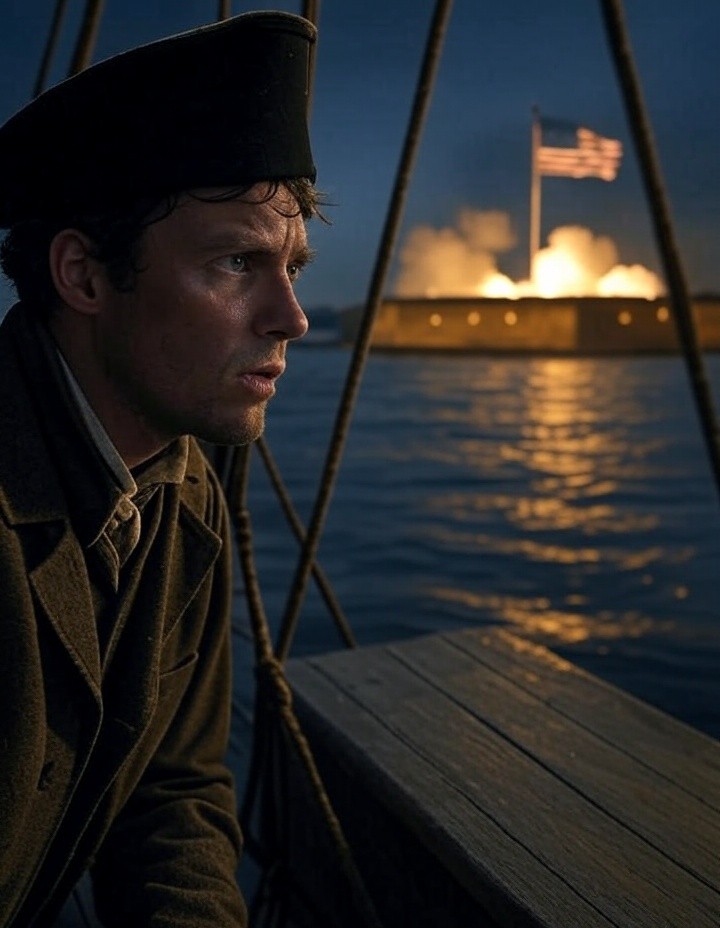
What’s crackin’, dear reader. As you ought to know by now, I’m an unapologetic patriot, just like you, and am looking forward enthusiastically to next year’s America 250 celebration. But my style is being cramped in extremis by what seems to be a growing number of anti-American shitbags.
One recent egregious example – recent only to me, apparently, because I couldn’t care less about professional football and would rather have my intestines extracted with a dull spoon than sit through an entire football game – is that the NFL has allegedly been solemnly piping in some so-called “Black National Anthem” before kickoff. That there hasn’t been a total boycott of the NFL until they knock that ridiculous shit off. Half of the country seems to have collectively overdosed on anti-patriotism and cable-news outrage. Spare me the racial separatism masquerading as “unifying gestures,” and you can stick your “two nations under God” horseshit all the way up your ass.
Today we’re going to talk about the actual, blood-and-black-powder origin story that stitched together the ragged, brawling entity we call the United States – a country a knows goddamn well there is only one national anthem that’s worth a shit, and that’s the one with rockets and bombs in it. And that one was written on September 14, 1814.
So let’s descend, shall we, dear reader, into the muck and the mire of the Patapsco River, where the air is thick with the sulfurous stench of war and the taste of shitty rum. It is here, dear reader, amidst the skull-rattling percussion of British naval cannons, that a lawyer named Francis Scott Key finds himself in what one might charitably call a jam.
Dig: a man, a lawyer no less – bobbing about on a sloop. He’s technically a guest of the enemy, having just negotiated a prisoner release. A gentleman’s errand, as we call it. But the British, not being ones for letting a good surprise go to waste, decide to keep him for the night. Why would those rotten British bastards do such a thing? Because they’re about to unleash a fireworks display of apocalyptic grandeur upon Baltimore’s Fort McHenry. Treacherous gits.
So there’s our guy, Frankie Key. Trapped. A spectator to the systematic, twenty-five-hour-long pulverization of his homeland. It must have been sheer sensory overload. The rockets – not the sexy, sleek, guided things of today, but fat, wobbly cones of incandescent rage – screaming across the sky. The “bombs bursting in air,” which are actually hollow iron shells packed with enough black powder to disembowel a small building, arcing in beautiful, deadly parabolas before detonating with sound and fury.
The Shit is absolutely making sudden and brutal impact with the proverbial Fan. The explosions are a relentless, psychedelic strobe. The noise is physical, a pressure wave that vibrates throughout the ship and into his marrow. And through it all, through this cacophony of imperial might, what is Key doing? Cowering? Praying? Trying to bribe a royal marine for a belt of grog? Probably. But he is also watching. His gaze is fixed, almost pathologically, on one thing: a magnificently oversized American flag fluttering over the fort. It’s so big it requires a whole legion to hoist, a gigantic middle finger stitched from wool and cotton. And as the night wears on, that flag becomes his focal point. His North Star in a constellation of chaos.
When the dawn finally cracks, the bombardment ceases. An eerie, ringing silence descends. And Key, squinting through the smoke and the haze and probably a monster headache, sees it. The flag. Still fucking there. A bit tattered and singed around the edges, but defiantly, miraculously, still there.
And in that moment of bleary-eyed, sleep-deprived, existentially pummeled relief, words begin to bubble up in the lawyer’s brain, fueled by adrenaline and whatever passes for patriotism when you’ve just watched your country take a 25-hour beating. He scribbles them down on the back of a letter: the perilous fight, the ramparts, the rockets’ red glare. Shit yes.
Your English professor, if they ever discussed this poem, which, let’s face it, likely will never happen, would probably call the poem, “Defence of Fort McHenry” a bit of a mess. They’d say it’s wordy, the meter is clunky, and it’s set to the tune of a British drinking song, the irony of which is deliciously rich. But you should tell your professor to get bent. The poem is a genuine artifact, written in a moment of pure, unadulterated terror and awe. It’s the sound of a man trying to make sense of the senseless, to find a sliver of meaning in the chaos of that night. And for that, I propose we raise a glass to the old boy. He saw the abyss, and all he could do was write a song about the light on the other side.
N.P.: “I Can’t Explain” – Scorpions

September 13th. Just another date on the calendar for most, probably. It’s Saturday, meaning most get a break from slogging through emails, pretending to care about spreadsheets. Most get to spend the day with the fucking loved ones and wonder if it’s too early to pour a drink. For me, it’s a day that calls for a certain type of reverence – the kind you can only really achieve with a glass of something dark and expensive in one hand and a dog-eared book in the other. Because today, way back in 1916, a magnificent, complicated, and utterly brilliant bastard named Roald Dahl was spat into this world.
Of course, I use the term “bastard” with the utmost affection. You see, the sanitized, candy-coated version of Dahl they fed us in elementary school – the jolly old grandpa figure with a twinkle in his eye – is a laughable fiction, a marketing ploy so grotesquely sweet it would give even Augustus Gloop a toothache. The real Dahl was something else entirely. A towering, cantankerous Welshman of Norwegian stock, a man who flew fighter planes, worked as a spy, survived a plane crash in the desert that basically rearranged his face, and then, only then, decided to write stories for children. You have to respect that kind of life sequencing. It’s like climbing Everest and then deciding to take up professional thumb-wrestling.
Think of it, man…the Great War’s churning Europe into a meat grinder, trenches belching mustard gas and madness, while over in this corner of the British Isles, a fishmonger’s son and his Norwegian wife, Sofie Magdalene Dahl, are hunkered down in a house that smells like salted cod and quiet immigrant grit, waiting for their third spawn to arrive. Not with a whimper…nope – Dahl bursts forth like a prototype for every pint-sized tyrant he’d scribble into immortality, already plotting his escape from the ordinary, or at least that’s how it feels when you retro-engineer the myth from the man.
Because Dahl wasn’t born with a silver spoon; he got handed a goddamn harpoon, courtesy of that Viking heritage his folks dragged across the North Sea like contraband luggage. Papa Harald, the elder Dahl, had fled Norway’s rigid hierarchies for the promise of Welsh rain and fish guts, only to drop dead when young Roald was barely out of diapers – some botched dental surgery gone septic, turning a routine tooth-pull into a full-on exit wound from life. Just like that, the family’s reeling, Sofie’s left to wrangle the brood solo, and little Roald’s absorbing his first lesson in the universe’s gleeful sadism: death doesn’t knock, it drills right through your jaw. You can almost hear the kid’s proto-writer brain whirring even then, filing away the absurdity for later deployment in tales where parents get squashed by rogue rhinoceroses or grandparents sprout wings from moonbeams. It’s the sort of origin story that screams payback’s a peach, and Dahl would spend the next seven decades turning the screws on every adult who’d ever wielded authority like a blunt instrument.
Fast-forward through the Repton School gauntlet, where the headmaster’s wife (Mrs. Plum, no shit) tested her rancid gandy prototypes on the boys like they were lab rats in a chocolate-coated fever dream. Dahl loathed the place and the vicious floggings doled out by masters who treated prepubescent hides like stress-relief punching bags. “All through my school life I was appalled,” he wrote later in his memoir Boy, “by the fact that masters and senior boys were allowed literally to wound other boys, and sometimes quite severely.” He not only survived it, but weaponized it. Those beatings birthed the gleeful grotesquery of Matilda, where the monstrous Miss Trunchbull heaves the kids around like ragdolls, or Charlie and the Chocolate Factory, with its parade of parental comeuppances doled out by a candymaker who’s equal parts benevolent god and capricious exterminator.
Cute to the 30s, and Dahl’s off gallivanting through Africa for the Shell Oil empire, playing expat tycoon in the Tanganyika sun until the Luftwaffe crashes his party in ’39. A fighter pilot, he’s shot down over the desert, waking up in the hospital with a busted skull and a spine rearranged like a drunk dude’s Jenga tower. From that chaos sprang his adult shorts, dark things like “Lamb to the Slaughter” where a frozen leg of lamb becomes the perfect murder weapon, or “The :Landlady” with its taxidermied guests and tea that’s just a tad too peachy.
But it’s the kids’ stuff that cements the legend, the books that sneak subversion past the parental radar: James and the Giant Peach rolling over authority figures like so many speed bumps, The BFG farting its way through linguistic lunacy, The Witches peeling back the hag masks on every snickering crone at the PTA bake sale.
I don’t mean to get too hagiographic here…Dahl was a prickly fucker, prone to barbs that drew real blood, the kind that still has folks clutching pearls a century on. Antisemetic rants in print, casual bigotry slipped into early editions like contraband schnapps, stuff that got coins yanked from mints and apologies issued posthumously by his own family. But ultimately, the guy was just a great story teller. And he worked his ass off. He wrote for two hours at dawn, two hours at dusk, churning out screenplays for Bond flicks and Bond girls, divorcing a Hollywood icon like Patricia Neal, then remarrying and plowing on till a blood disease claimed him in ’90 at 74.
So raise a glass of something fizzy and forbidden today to the birth of this Welsh-Norwegian badass who proved that the best revenge is a story served cold and crooked. Sure, he wrote for kids, but Dahl rigged the game so they’d grow up questioning every adult edict, every saccharine lie, every caning disguised as character-building. In a world still grinding boys into fodder and girls into footnotes, his pages remain explosive. The real monsters are the ones who think they own the rules.
Now go read something that’ll scar your soul just right, and tell the headmasters to shove it.
N.P.: “Mind Like A Tree” – Scorpions

Hey…dear reader. What a shitty week this was. Glad it’s in the rearview. There’s been too much on my mind. Or as Wordsworth said…the world is too much with me.
But I’m here, not writing much these last couple days.
I’m just trying to sort out my thoughts, which are myriad and dark.
N.P.: “Burning” – Matteo Tura

Happy birthday, Mary. ❤️
Well, well, well, dear reader, it’s Monday again, that cruel, coffee-sucking beast that lurches into our lives like a hungover, ‘roided out bouncer at a dive bar. And here I am, your battle-scarred scribe, fresh off a nine-day bender of a writing marathon – call it a full-throttle, no-brakes assault on this sprawling, hydra-headed bastard of manuscript I’ve been wrestling like some demonic rodeo bull.
The mission was simple, or so I thought: take this shaggy, half-feral draft of a book – my latest attempt to claw some truth out of the chaotic void – and beat it into something resembling coherence. Nine days of caffeine-fueled, sleep-deprived madness, hammering the keys until my fingers ached like the keys had been hammering back. And the verdict? Victory, of a sort.
There’s a draft now, a real, tangible beast, rough as a three-day bender and twice as messy, but it exists, goddamn it, in the digital ether. An exceedingly rough draft, for my taste, with all the structural integrity of a sandcastle in a shitstorm. But here’s the bright side, the one big, beautiful, undeniable fact I’m clinging to like a drunk to a lamppost: it’s good. It’s not the polished diamond it needs to be before I put it out, but the fundamental shape of it, the raw architecture, is the best it has ever been. So I’ll take it. I will snatch that win from the jaws of chaos and hold it aloft, even as the to-do list stretches on into what feels like infinity.
One of the biggest successes of the week came from me experimenting with the chapter order. This has been bugging me a long time. I tried arranging them thematically, which, while common in memoirs, failed as badly as I thought it would here. I tried arranging things purely chronologically, but that didn’t work either. Ultimately, I had it arranged the way it’s supposed to be. It jumps all over hell, timewise, but there’s no other way to tell it.
Of course, because the universe is a sadistic prick with a twisted sense of humor, nothing in this adult world of ours ever goes down smoothly. The last week was a parade of distractions, obligations, and cosmic middle fingers – everything from Wi-Fi betrayals to existential crises that hit like a liver kick. So, yeah, I didn’t check every box on my grandiose and erumpent to-do list. The dream was to emerge from this nine-day gauntlet with a draft so tight it could swagger into a publisher’s office and demand a corner suite. Reality, as always, has other plans. But I’m not flogging myself too hard over it. Perfection’s a myth, a siren song for suckers, and I’d rather have a flawed, fighting draft than a pristine fantasy that never leaves the page.
So here we are, Monday night, the world still spinning, the book still breathing. I’m battered but unbowed, ready to dive back into the fray with a sharper blade and a meaner grin. Stay tuned, sexy reader – you’re riding shotgun on this weird ride, and I promise you, it’s gonna be one hell of a show.
N.P.: “Tron Ares – As Alive As You Need Me To Be – Metal Version” – Artificial Fear
Alright, strap in, dear reader, because we’re about to tear into the quivering, gelatinous underbelly of one very vaginal Malcolm Gladwell, the pop-sociology huckster who’s been peddling his slick, airport-bookstore pablum to the gullible masses for far too long. This week, the man who made a career out of repackaging obvious truths as revelatory “tipping points” has finally shown his true colors, and they’re a repulsive hue of pusillanimity. On a podcast – The Real Science of Sport, no less – Gladwell admitted he was “cowed” into supporting the absurd notion that men, by some perverse alchemy of ideology, can compete as women in sports. Cowed. Like a fucking farm animal.
Let that sink in. Let the full, wretched, and frankly hilarious implications of that statement marinate in the primordial ooze of your consciousness. This is a man who built a career on explaining the hidden mechanics of everything from ketchup to success, the guru who supposedly sees the intricate threads connecting outliers and dogwalkers and Jamaican sprinters. Yet, when faced with a cultural blitzkrieg demanding he assent to a proposition as biologically sound as a flat earth, he tucked his pathetic tail so far between his legs it was tickling his famously frizzy chin.
He was bullied. Intimidated. Pressured into nodding along with a fantasy so complete, so utterly detached from observable reality, that a reasonably bright toddler could debunk it with a crayon and a rudimentary understanding of anatomy. The alleged intellectual heavyweight, the celebrated thinker, apparently possesses a spine with the structural integrity of warm Jell-O. He saw the mob, torches aflame and pronouns sharpened, and decided that the path of least resistance was to simply shut his mouth and pretend the emperor’s new genitalia, were, in fact, stunning and brave. Now he’s backtracking, natch, whining that he’s “ashamed” of his silence at a 2022 MIT Sloan Sports Analytics Conference where he played moderator to a panel stacked with trans activists. Apparently, he sat there, nodding a long like a bobblehead, while some tranny athlete turned to panelist Ross Tucker and demanded, “You have to let us win.” Imagine it, dear reader: a grown-ass man, a supposed intellectual, heard that bald-faced lunacy and didn’t say a fucking word. Didn’t push back. Didn’t call out the absurdity of a man demanding a free pass to dominate women’s sports. Instead, he played the good little progressive, keeping his mouth shut because…why? Fear of the Twitter mob? Worried he’d lose his invite to the next Davos circle-jerk? Whatever the reason, he admits he was “dishonest,” letting “howlers” pass without comment, all because he was too spineless to speak the truth he claims he believed along: that males have no place competing in female sports categories.
Boo-fucking-hoo, Malcolm. This isn’t about tipping points or the 10,000-hour rule. This is about a complete and utter abdication of the one thing a writer – a thinker – is supposed to have: courage. The courage to look at a thing, a real thing, and describe it as it is, not as a screeching mob of idiots on social media demands it be described.
It occurs to me now that my dear reader may not know much, or anything at all, about our boy Malcolm. So, for those of you who’ve been too busy actually reading something worth a shit to notice his rise to fame, Gladwell, a Canadian scribbler with a mop of hair that screams “I’m trying too hard to be quirky,” burst onto the scene with The Tipping Point (2000), a book that took the radical stance that – get this – ideas spread like viruses. Wow. How groundbreaking. He followed it up with Blink (2005), where he told us trusting your gut is sometimes a thing, and Outliers (2008), where he “discovered” that success involves hard work and luck. No shit. The guy’s built an empire on stating the obvious with just enough jargon to make middle managers feel like they’re reading Foucault. A staff writer for The New Yorker and a podcast darling, he’s been coasting on this faux-intellectual schtick for decades, wrapping commonsense observations in a veneer of statistical razzle-dazzle that collapses under scrutiny faster than a house of cards in a hurricane. His work is the literary equivalent of a Ted Talk: flashy, shallow, and designed to make you feel smarter without actually challenging what you think.
This isn’t just a lapse in judgment; it’s a betrayal of reason itself. We’re talking about a guy who’s made millions pontificating on human behavior, yet when push came to shove, he folded like a cheap lawn chair under the weight of ideological bullying. Again, a five-year-old with a basic grasp of biology knows that boys are not and can never be girls, that men’s bodies – packed with testosterone, denser bones, and more muscle mass – give them a physical edge in sports that no amount of “identity” can erase. This isn’t rocket science; it’s not even high school biology. It’s the kind of truth so glaringly obvious it’s embarrassing to have to articulate it. Yet Gladwell, this self-styled guru of insight, claims he was “cowed” into silence. The man’s 62 years old, an alleged literary heavyweight with a platform bigger than most, and he’s whimpering about being bullied into silence? Pathetic.
This confession doesn’t just torch his credibility; it proves he never had any to begin with. A writer – a real writer – doesn’t just regurgitate trendy narratives or cower before the zeitgeist. A real writer wields his pen like a machete, cutting through bullshit to get to the truth, no matter who’s screaming what. Gladwell’s admission reveals him as a fraud, a man so desperate to stay in the good graces of the cultural elite and their luxury beliefs that he’d rather lie than stand up for what he claims to believe. And now he’s “ashamed”? Fuck you. This isn’t shame; it’s damage control. He’s seen the wind shifting – people like Riley Gaines and Amy Hamm calling him out on X for his flip-flopping – and he’s scrambling to save face. Too late, jackass. You’ve shown your hand, and it’s pitiful.
The kicker here is that he’s not even apologizing for the right reasons. He’s not sorry for propping up a narrative that undermines fairness in women’s sports or for gaslighting female athletes who’ve been forced to compete against deluded males. Nope. He’s sorry he didn’t speak up, sorry he got caught looking like an absolute coward. It’s the intellectual equivalent of a politician saying, “I regret if anyone was offended.” Weak sauce, Malcolm. If you’re going to take a stand now, at least have the balls to own the harm your silence caused. Female athletes have been cheated out of opportunities, podiums, and scholarships because of this nonsense, and you sat there, complicit, while it happened.
What is the value of a mind that can be so easily herded? What are we to make of his entire body of work now, knowing that the author’s primary operating principle isn’t intellectual curiosity, but a deep-seated fear of being yelled at?
His books now read like artifacts from a different, more chickenshit dimension. Blink becomes the story of a man who makes a snap judgement to save his own skin. Outliers seems less a study of success and more a roadmap for conforming to the prevailing groupthink to avoid ostracism. This confession re-contextualizes everything. It reveals the man behind the curtain is not a wizard, but just a very nervous publicist with a good haircut, frantically pulling levers to maintain an illusion.
So he feels bad about it now. He’s seen the tide turn just enough that he can peek his head out of his Canadian foxhole and whisper, “Um, for the record, I was a scared little bitch.” Fine. Good for him. But absolution is not on the menu. You don’t get a cookie for admitting you abandoned your post when the shooting started. You get contempt. You get whatever is beneath contempt. You get the acidic, burning realization that the people we were told were our intellectual navigators were just reading from a script handed to them by the most aggressive and least coherent people in the room.
So where does this leave Gladwell’s legacy? In the fucking toilet, that’s where. If he was ever a legitimate writer – and that’s a massive “if,” given his track record of repackaging platitudes as profundity – this episode proves he’s nothing more than a brainless weather vane, spinning whichever way the cultural winds blow. A real writer doesn’t need to be bullied into believing bullshit; they call it out, loud and proud, even when it’s inconvenient. Gladwell’s spent his career dodging hard truths in favor of palatable narratives, and this latest fiasco is just the cherry on top of a career built on intellectual cowardice. He’s not a thinker; he’s a performer, a snake-oil salesman who’s finally be caught with his pants down.
To the readers still clutching their dog-eared copies of Blink: wake up. Your boy Malcolm’s been exposed as a fraud who’d rather kowtow to ideologues than stand up for what’s right. And to Gladwell himself: next time you’re tempted to play the objective observer, do us all a favor and keep your lying mouth shut. Or better yet, try to retrieve your testicles out of whatever tranny’s purse you left them in and say what you mean. Until then, you’re just another chickenshit hack, cowed by the mob and unworthy of the page.
The whole pathetic spectacle leaves a taste in your mouth like cheap gin and cowardice. The man was never a danger, never a threat to the established order. He was its court jester, its high-gloss flatterer. And then the court demanded he believe that two plus two equals fish, he didn’t even have the balls to argue. He just asked what kind of fish.
N.P.: “God’s Gonna Cut You Down (feat. Adoration Destroyed)” – Dead Animal Assembly Plant
Greetings from the Dissolute Desk, dear reader – this is your captain speaking, though, let’s be honest, the term “captain” implies a level of control over this particular vessel that would make Ahab weep with envy. Today is Hump Day, that blessed Wednesday phenomenon that sits like a literary critic at a poetry slam – uncomfortable, slightly drunk, and desperately trying to find meaning in the chaos.
Just a brief update today – and my brief, I mean the literary equivalent of what pharmaceutical companies call “brief” side effects, which somehow manage to include everything from mild nausea to spontaneous combustion – since I’m currently submerged in the proverbial full-court press on this goddamn book. And yes, to the one dear reader who thinks I should cuss less, I said “goddamn” because sometimes the English language requires the theological weight of profanity to adequately capture the Sisyphean absurdity of the creative process.
You know how, as an adult, everything becomes a Byzantine maze of bureaucratic torment designed by someone who clearly never had to navigate said maze while suffering from the literary equivalent of erectile dysfunction? That’s to say: the persistent, maddening, inability to get your metaphors up when you need them most? So that’s going on, but still – and here’s where my inherent optimism battles my well-documented pessimism like two drunk philosophers arguing about the meaning of existence at 3 AM – progress is being made.
Meeting my goals today is a pretty big deal when it comes to getting a draft done by September 8, which looms before me like a literary deadline should: with all the warm, welcoming energy of a proctological examination performed by someone with exceptionally large hands and a questionable understanding of personal space.
But let’s talk about this Wednesday celebration business, shall we? Because if there’s one thing I’ve learned in my years of professional literary debauchery – and by professional, I mean I occasionally get paid for this madness, though not nearly enough to justify the liver damage – it’s that midweek celebrations require a certain philosophical commitment to the absurd.
Think of it, man: it’s 2:17 PM Wednesday afternoon. You’re three cups deep into what your local coffee shop optimistically calls their “house blend” but which tastes suspiciously like it was filtered through a gym sock that’s seen better decades. Your manuscript stares back at you from the computer screen with all the judgement of a disappointed parent who just discovered your college transcript. The cursor blinks. Blinks again. Taunts you with its rhythmic insistence that something should be happening here, some magical alchemy of words and ideas that transforms the mundane suffering of existence into something approaching art.
And then – miracle of miracles – the worse come. They’re okay words. Not the kind of luminous prose that makes readers weep and critics genuflect. But words nonetheless. Honest, slightly deranged words that capture something essential about what it means to be a human being stumbling through the cosmic joke of modern life with nothing but caffeine, stubbornness, and an inexplicable faith that somehow, against all evidence to the contrary, this particular arrangement of sentences might matter.
The adult world, you see, operates on the principle that nothing should ever be simple, straightforward, or remotely pleasant. Need to renew your driver’s license? That’s be a three-hour odyssey through a government office that apparently hasn’t been updated since the Carter administration. Want to submit a manuscript? Here’s a 17-page submission guide that contradicts itself no fewer than 43 times and requires you to format your work in a font that doesn’t exist on any computer manufactured after 1987.
But writing – actual writing, the kind that matters – operates on different principles entirely. It demands that you show up, day after day, to face the blank page with nothing but your wits and whatever chemical assistance you can legally obtain. It requires a kind of courage that’s simultaneously heroic and utterly ridiculous, like charging into battle armed only with a thesaurus and a profound sense of existential dread.
So yes, dear reader, progress is being made. Slow, painful, occasionally hallucinogenic progress, but progress nonetheless. Each sentence wrested from the void feels like a small victory against the forces of entropy and editorial bitching. Each paragraph that doesn’t make me want to delete everything and take up accounting represents another step closer to that September 8 deadline, which approaches with all the subtlety of a methamphetaminic rhinoceros.
And if that’s not worth celebrating on a Wednesday afternoon, then I clearly don’t understand the fundamental principles of either celebration or Wednesday, both of which seem increasingly arbitrary the longer I contemplate them.
Now, if you’ll excuse me, I have a book to finish and a hump day to properly honor. The words won’t write themselves, though fuck knows I’ve asked them nicely.
Transmission ends. Resume your regularly scheduled existential crisis.
From the Dissolute Desk, where the coffee’s strong, the deadlines are stronger, and the metaphors occasionally achieve escape velocity.
N.P.: “Pissed Off and Mad About It” – Texas Hippie Coalition
Happy September, dear reader. Yo rent is due.
So picture this…September 1, 1952, and some editor at Life magazine is probably chain-smoking Lucky Strikes while wondering if they’ve just committed career suicide by dedicating an entire issue to what amounts to an extended fishing story. I’m talking, of course, about Ernest Hemingway’s The Old Man and the Sea, a novella so deceptively simple it makes you wonder if maybe, just maybe, you’ve been overthinking this whole literature thing your entire booze-addled existence. Or maybe that’s just me. Anyway, the editor mentioned above need not have worried, because the story’s success was absurd: five million copies. In two days. Two! As if the entire American reader public suddenly developed an inexplicable craving for tales of Cuban fisherman wrestling with marlins the size of small automobiles. Which, when you think about it, is exactly what happened, and isn’t that just the most ridiculous thing you’ve ever heard?
Now, I know what you’re thinking – because I’m thinking it too – what kind of masochistic genius does it take to craft a story that’s essentially one old guy versus one big fish and somehow make it feel like the entire human condition is hanging in the balance? The answer, it turns out, involves the kind of narrative compression that would make a neutron star jealous, each sentence so dense with meaning it threatens to collapse into a literary black hole.
Santiago – our weathered protagonist who’s gone eighty-four days without catching so much as a sardine (which, let’s be honest, is the kind of professional dry spell that would drive most of us to day-drinking and career reconsideration) – embodies this magnificent futility that defines the human experience. Here’s a man who knows, knows with the certainty of sunrise and hangovers, that he’s probably going to lose this battle. The marlin is bigger, stronger, operates in its natural element while Santiago is basically a land mammal with delusions of aquatic grandeur. And yet – and this is where Hemingway’s genius reaches levels of almost pornographic intensity – he fights anyway.
Because what else is there to do? Surrender to the inevitable mediocrity of a fisherman who can’t catch fish? Accept that maybe the universe is just one giant cosmic joke and we’re all the punchline? Hell no. Santiago straps himself to that boat and engages in what amounts to a three-day death match with a creature that represents everything he’ll never be – young, powerful, at home in the vast indifference of the sea.
The beauty of this whole setup – and by beauty I mean the kind of terrible beauty that makes you want to simultaneously laugh and cry and pour another drink – is how Hemingway strips away every unnecessary word, every flowery metaphor, every literary flourish that might distract from the essential brutality of the confrontation. This is prose as sharp and unforgiving as a gaff hook, sentences that cut straight to the bone of meaning without bothering with the courtesy of anesthesia.
And the kicker? Santiago wins and loses simultaneously. He catches the goddamn fish – this magnificent beast that represents everything noble and wild and free in the world – only to watch the sharks reduce it to a skeleton during the long journey home. Which is, of course, exactly what life does to all our grand ambitions and noble struggles. We fight the good fight, we occasionally triumph, and then reality shows up like a pack of hungry sharks to remind us that victory is always temporary and defeat is the only universal constant.
But here’s what those five million readers understood, consciously or not, when they devoured this story faster than Americans consume processed cheese: Santiago’s defeat isn’t really a defeat at all. It’s defiance. It’s the middle finger raised to a universe that seems designed to crush the human spirit. It’s the refusal to go gentle into that good night, even when you’re 84 years old and your hands are cramping and the sharks are circling and every rational part of your brain is screaming that this is madness.
When the formerly prestigious Pulitzer committee awarded Hemingway the prize in 1954, they weren’t just recognizing technical mastery – though God knows the technical mastery is there, every sentence calibrated with the precision of a Swiss chronometer. They were acknowledging something deeper, more essential: the recognition that great literature isn’t about happy endings or moral clarity or the comfortable illusion that virtue is rewarded and evil punished. Great literature is about the futility of human effort in the face of cosmic indifference, and finding beauty in that futility.
So today let’s raise a glass to Santiago and his marlin, to Hemingway and his impossible brevity, to the five million readers who recognized greatness when it slapped them across the face like a salty wave. In a world that increasingly rewards mediocrity and celebrates participation trophies, The Old Man and the Sea stands as a monument to the idea that sometimes the most heroic thing you can do is fight a battle you know you’re going to lose.
Because in the end, isn’t that what we’re all doing anyway?
N.P.: “Sunglasses On At The Dollar Store” – Shockwire

Had an opportunity to spend some time at a cemetery today. We’re in the middle of a bit of a heat wave right now in the Creek, so it was far too hot out there for my comfort. But heat aside, it was rather pleasant. Not to get all goth about it, but I’ve always liked cemeteries. I find them, as I’d imagine most do, very peaceful. Even at night. Especially at night. It’s never “creepy” or even morbid. Walking among the stones is calming in a way few other things are. The place is quiet, obviously, but that’s not where the peace and calm come from. Those, for me, come from the sense of absolute inevitability. Whatever may be weighing you down in your life at the moment weighs a lot less when you are reminded that no matter what you do, no matter what choices you make, no matter how intelligent or passionate or intuitive or loved you may be, you are going to end up right here. I recommend spending some time at a cemetery occasionally. It’s good for you. You need to remind yourself that The Clock Is Ticking.
Anyway, we have a few items of calendric business to attend to. To wit:
First up, Happy Birthday to William Saroyan who was born in 1908. In the event that dear reader is not an English major, allow me to ‘splain. He was the guy who proved that you don’t need to kiss the ass of literary establishment to write something that’ll make grown-ass adults questions their life choices. He was the sort of writer who looked at conventional narrative structure, laughed maniacally, and then proceeded to craft stories that hit you in the liver like a surprise audit from the IRS.
He won the Pulitzer back before the Pulitzer became a meaningless joke for The Time of Your Life – because apparently the universe has a sense of humor about timing – and then had the balls to initially reject it. Fuck yes! He basically told the (at the time) most prestigious literary award in America to sit on it and vigorously spin. Also check out The Human Comedy.
Fast-forward (or rewind, depending on your relationship with linear time and sobriety) to 1837, when Ralph Waldo Emerson dropped the mic before mics were even invented, and stood up at Harvard – again, back when Harvard was prestigious, and not a cesspool of anti-Americanism and antisemitism – and basically told American literature to grow a pair and stop copying its European homework.
“The American Scholar” was a literary declaration of independence wrapped with enough intellectual firepower to level a small philosophy department. Emerson looked at American writers who were still desperately trying to sound British and said, essentially, “Why are you like this?”
The man had the audacity to suggest that American writers should – brace yourself, dear reader – write about America. Revolutionary stuff, right? Except it really was. Before Emerson’s verbal smackdown, American literature was about as authentically American as a gas station sushi roll.
Up next…it’s We Love Memoirs Day. I don’t usually appreciate the declaration of “Days,” to any particular cause or whatever, but since memoir is the genre I usually work in, why the hell not? Memoirs are the literary equivalent of that friend who has absolutely no filter after three drinks: uncomfortable, brutally honest, and somehow exactly what you needed to hear.
The memoir is where we writers go to bleed on the page and somehow make it beautiful. It’s the genre that says, “You think fiction is wild? Hold my therapy bills.” These are the books that make you realize your own problems aren’t so bad, or alternatively, make you question every life choice you’ve ever made. Both outcomes are equally valid and equally entertaining.
There’s something pleasantly masochistic about diving into someone else’s trauma and calling it entertainment. But hey, at least we’re honest about it now. We’ve collectively decided that raw, unfiltered human experience is worth celebrating, which is either deeply profound or deeply disturbing, depending on your philosophical stance and B.A.C.
Finally, August 31, 1888 gives us the discovery of Mary Ann Nichol’s body in Whitechapel. The first acknowledged victim of Jack the Ripper, a name that would launch a thousand terrible crime novels and enough conspiracy theories to keep internet forums busy until the heat death of the universe.
Here’s the thing about Jack the Ripper: he’s become literature’s favorite boogeyman, inspiring more truly terrible prose than a creative writing workshop after happy hour. The man (presumably) committed horrific crimes and somehow became a cultural icon, which says something most people find deeply unsettling about our collective psyche that they don’t want to examine too closely.
The Ripper murders have spawned everything from scholarly dissertations to graphic novels to what can only be described as “fan fiction,” and honestly, that last category should probably worry you more than it does. But there’s something about the combination of mystery, Victorian atmosphere, and genuine horror that keeps writers coming back like addicts.
What do these ridiculously disparate things have to do with each other, besides the date? I don’t know. Maybe nothing. The birth of a literary rebel, a transcendentalist’s declaration of cultural independence, a celebration of oversharing as an art form, and the beginning of history’s most literary murder spree. Yeah, nothing in common except occurring on August 31.
Which is today. And if that’s not worth raising a glass (or six) to, then frankly, you’re taking this whole “literary appreciation” thing far too seriously. Sometimes the best way to honor great writing is to acknowledge that it’s all beautifully, chaotically, magnificently insane – much like the people who create it and the people who consume it with the desperation of the chronically under-caffeinated.
Cheers.
N.P.: “Twinkle Twinkle Little Star – Minor Epic Version” – Rok Nardin