Category Archives: Dead Poets Society

September 14, 2025

What’s crackin’, dear reader.  As you ought to know by now, I’m an unapologetic patriot, just like you, and am looking forward enthusiastically to next year’s America 250 celebration.  But my style is being cramped in extremis by what seems to be a growing number of anti-American shitbags.
One recent egregious example – recent only to me, apparently, because I couldn’t care less about professional football and would rather have my intestines extracted with a dull spoon than sit through an entire football game – is that the NFL has allegedly been solemnly piping in some so-called “Black National Anthem” before kickoff.  That there hasn’t been a total boycott of the NFL until they knock that ridiculous shit off.  Half of the country seems to have collectively overdosed on anti-patriotism and cable-news outrage.  Spare me the racial separatism masquerading as “unifying gestures,” and you can stick your “two nations under God” horseshit all the way up your ass.

Today we’re going to talk about the actual, blood-and-black-powder origin story that stitched together the ragged, brawling entity we call the United States – a country a knows goddamn well there is only one national anthem that’s worth a shit, and that’s the one with rockets and bombs in it.  And that one was written on September 14, 1814.
So let’s descend, shall we, dear reader, into the muck and the mire of the Patapsco River, where the air is thick with the sulfurous stench of war and the taste of shitty rum.  It is here, dear reader, amidst the skull-rattling percussion of British naval cannons, that a lawyer named Francis Scott Key finds himself in what one might charitably call a jam.

Dig: a man, a lawyer no less – bobbing about on a sloop.  He’s technically a guest of the enemy, having just negotiated a prisoner release.  A gentleman’s errand, as we call it.  But the British, not being ones for letting a good surprise go to waste, decide to keep him for the night.  Why would those rotten British bastards do such a thing?  Because they’re about to unleash a fireworks display of apocalyptic grandeur upon Baltimore’s Fort McHenry.  Treacherous gits.

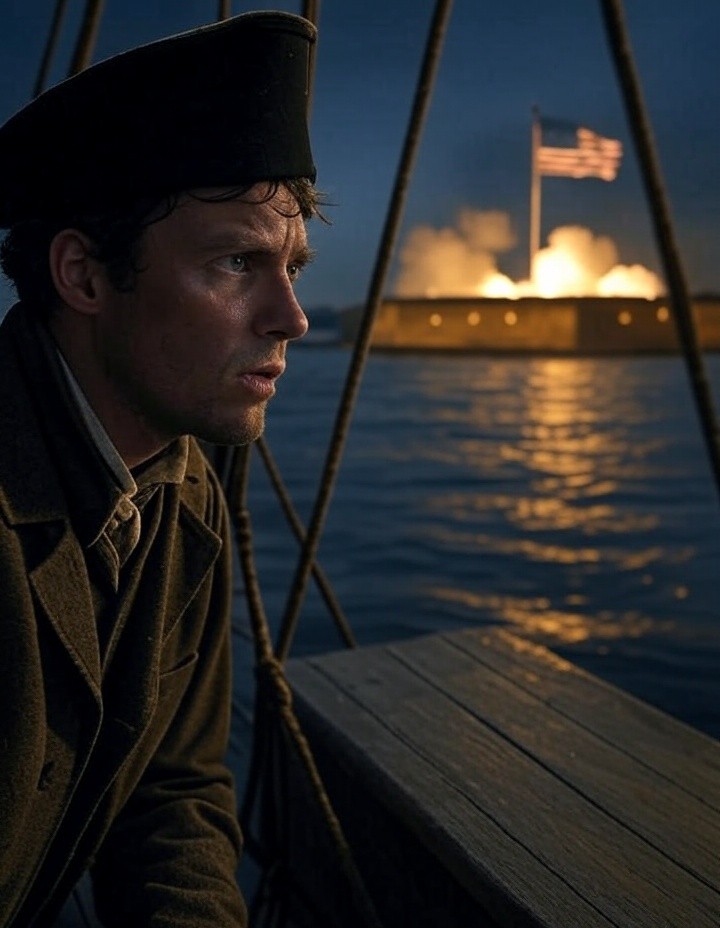
So there’s our guy, Frankie Key.  Trapped.  A spectator to the systematic, twenty-five-hour-long pulverization of his homeland.  It must have been sheer sensory overload.  The rockets – not the sexy, sleek, guided things of today, but fat, wobbly cones of incandescent rage – screaming across the sky.  The “bombs bursting in air,” which are actually hollow iron shells packed with enough black powder to disembowel a small building, arcing in beautiful, deadly parabolas before detonating with sound and fury.

The Shit is absolutely making sudden and brutal impact with the proverbial Fan.  The explosions are a relentless, psychedelic strobe.  The noise is physical, a pressure wave that vibrates throughout the ship and into his marrow.  And through it all, through this cacophony of imperial might, what is Key doing?  Cowering?  Praying?  Trying to bribe a royal marine for a belt of grog?  Probably.  But he is also watching.  His gaze is fixed, almost pathologically, on one thing: a magnificently oversized American flag fluttering over the fort.  It’s so big it requires a whole legion to hoist, a gigantic middle finger stitched from wool and cotton.  And as the night wears on, that flag becomes his focal point.  His North Star in a constellation of chaos.

When the dawn finally cracks, the bombardment ceases.  An eerie, ringing silence descends.  And Key, squinting through the smoke and the haze and probably a monster headache, sees it.  The flag.  Still fucking there.  A bit tattered and singed around the edges, but defiantly, miraculously, still there.

And in that moment of bleary-eyed, sleep-deprived, existentially pummeled relief, words begin to bubble up in the lawyer’s brain, fueled by adrenaline and whatever passes for patriotism when you’ve just watched your country take a 25-hour beating.  He scribbles them down on the back of a letter: the perilous fight, the ramparts, the rockets’ red glare.  Shit yes.

Your English professor, if they ever discussed this poem, which, let’s face it, likely will never happen, would probably call the poem, “Defence of Fort McHenry” a bit of a mess.  They’d say it’s wordy, the meter is clunky, and it’s set to the tune of a British drinking song, the irony of which is deliciously rich.  But you should tell your professor to get bent.  The poem is a genuine artifact, written in a moment of pure, unadulterated terror and awe.  It’s the sound of a man trying to make sense of the senseless, to find a sliver of meaning in the chaos of that night.  And for that, I propose we raise a glass to the old boy.  He saw the abyss, and all he could do was write a song about the light on the other side.

N.P.: “I Can’t Explain” – Scorpions
September 13, 2025

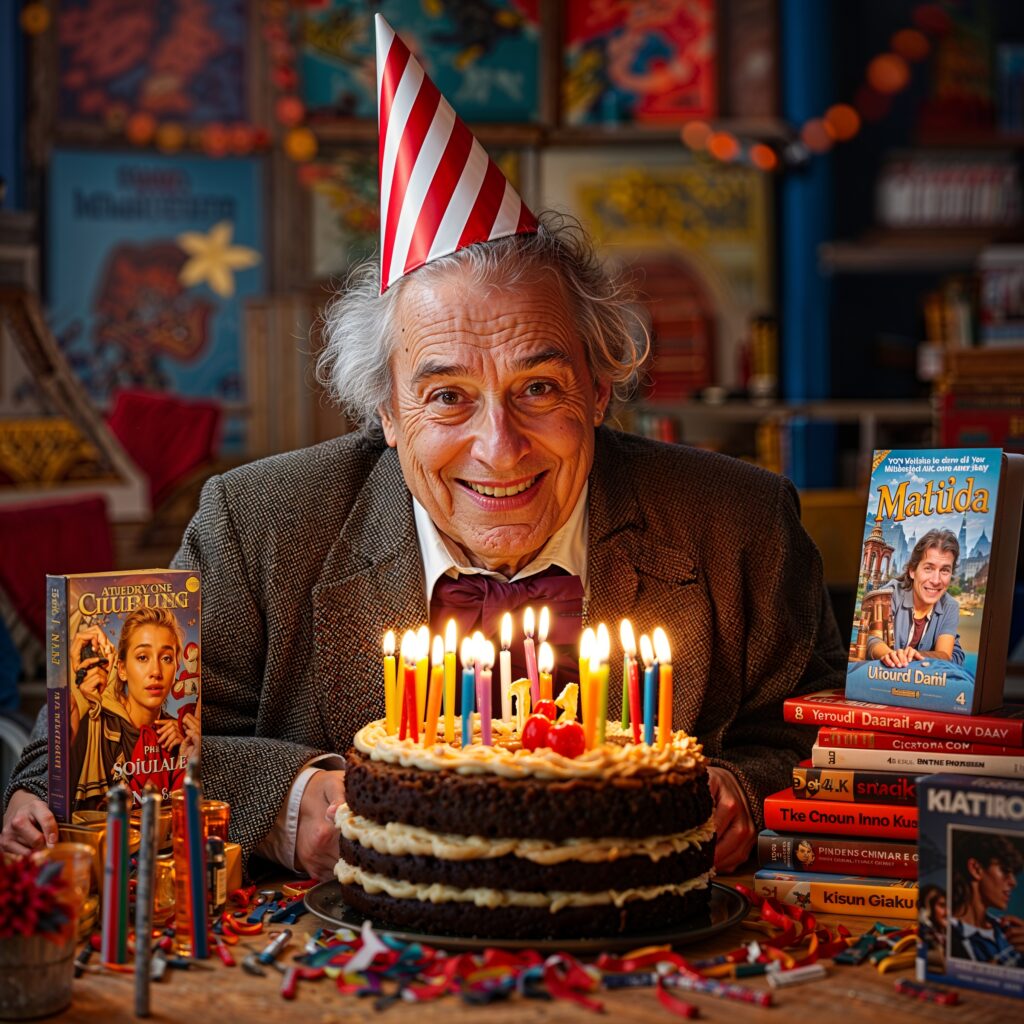
September 13th.  Just another date on the calendar for most, probably.  It’s Saturday, meaning most get a break from slogging through emails, pretending to care about spreadsheets.  Most get to spend the day with the fucking loved ones and wonder if it’s too early to pour a drink.  For me, it’s a day that calls for a certain type of reverence – the kind you can only really achieve with a glass of something dark and expensive in one hand and a dog-eared book in the other.  Because today, way back in 1916, a magnificent, complicated, and utterly brilliant bastard named Roald Dahl was spat into this world.

Of course, I use the term “bastard” with the utmost affection.  You see, the sanitized, candy-coated version of Dahl they fed us in elementary school – the jolly old grandpa figure with a twinkle in his eye – is a laughable fiction, a marketing ploy so grotesquely sweet it would give even Augustus Gloop a toothache.  The real Dahl was something else entirely.  A towering, cantankerous Welshman of Norwegian stock, a man who flew fighter planes, worked as a spy, survived a plane crash in the desert that basically rearranged his face, and then, only then, decided to write stories for children.  You have to respect that kind of life sequencing.  It’s like climbing Everest and then deciding to take up professional thumb-wrestling.

Think of it, man…the Great War’s churning Europe into a meat grinder, trenches belching mustard gas and madness, while over in this corner of the British Isles, a fishmonger’s son and his Norwegian wife, Sofie Magdalene Dahl, are hunkered down in a house that smells like salted cod and quiet immigrant grit, waiting for their third spawn to arrive.  Not with a whimper…nope – Dahl bursts forth like a prototype for every pint-sized tyrant he’d scribble into immortality, already plotting his escape from the ordinary, or at least that’s how it feels when you retro-engineer the myth from the man.

Because Dahl wasn’t born with a silver spoon; he got handed a goddamn harpoon, courtesy of that Viking heritage his folks dragged across the North Sea like contraband luggage.  Papa Harald, the elder Dahl, had fled Norway’s rigid hierarchies for the promise of Welsh rain and fish guts, only to drop dead when young Roald was barely out of diapers – some botched dental surgery gone septic, turning a routine tooth-pull into a full-on exit wound from life.  Just like that, the family’s reeling, Sofie’s left to wrangle the brood solo, and little Roald’s absorbing his first lesson in the universe’s gleeful sadism: death doesn’t knock, it drills right through your jaw.  You can almost hear the kid’s proto-writer brain whirring even then, filing away the absurdity for later deployment in tales where parents get squashed by rogue rhinoceroses or grandparents sprout wings from moonbeams.  It’s the sort of origin story that screams payback’s a peach, and Dahl would spend the next seven decades turning the screws on every adult who’d ever wielded authority like a blunt instrument.

Fast-forward through the Repton School gauntlet, where the headmaster’s wife (Mrs. Plum, no shit) tested her rancid gandy prototypes on the boys like they were lab rats in a chocolate-coated fever dream.  Dahl loathed the place and the vicious floggings doled out by masters who treated prepubescent hides like stress-relief punching bags.  “All through my school life I was appalled,” he wrote later in his memoir Boy, “by the fact that masters and senior boys were allowed literally to wound other boys, and sometimes quite severely.”  He not only survived it, but weaponized it.  Those beatings birthed the gleeful grotesquery of Matilda, where the monstrous Miss Trunchbull heaves the kids around like ragdolls, or Charlie and the Chocolate Factory, with its parade of parental comeuppances doled out by a candymaker who’s equal parts benevolent god and capricious exterminator.

Cute to the 30s, and Dahl’s off gallivanting through Africa for the Shell Oil empire, playing expat tycoon in the Tanganyika sun until the Luftwaffe crashes his party in ’39.   A fighter pilot, he’s shot down over the desert, waking up in the hospital with a busted skull and a spine rearranged like a drunk dude’s Jenga tower.  From that chaos sprang his adult shorts, dark things like “Lamb to the Slaughter” where a frozen leg of lamb becomes the perfect murder weapon, or “The :Landlady” with its taxidermied guests and tea that’s just a tad too peachy.

But it’s the kids’ stuff that cements the legend, the books that sneak subversion past the parental radar: James and the Giant Peach rolling over authority figures like so many speed bumps, The BFG farting its way through linguistic lunacy, The Witches peeling back the hag masks on every snickering crone at the PTA bake sale.

I don’t mean to get too hagiographic here…Dahl was a prickly fucker, prone to barbs that drew real blood, the kind that still has folks clutching pearls a century on.  Antisemetic rants in print, casual bigotry slipped into early editions like contraband schnapps, stuff that got coins yanked from mints and apologies issued posthumously by his own family.  But ultimately, the guy was just a great story teller.  And he worked his ass off.  He wrote for two hours at dawn, two hours at dusk, churning out screenplays for Bond flicks and Bond girls, divorcing a Hollywood icon like Patricia Neal, then remarrying and plowing on till a blood disease claimed him in ’90 at 74.

So raise a glass of something fizzy and forbidden today to the birth of this Welsh-Norwegian badass who proved that the best revenge is a story served cold and crooked.  Sure, he wrote for kids, but Dahl rigged the game so they’d grow up questioning every adult edict, every saccharine lie, every caning disguised as character-building.  In a world still grinding boys into fodder and girls into footnotes, his pages remain explosive.  The real monsters are the ones who think they own the rules.
Now go read something that’ll scar your soul just right, and tell the headmasters to shove it.

N.P.: “Mind Like A Tree” – Scorpions

September 9, 2025


Put your drinking cap on, dear reader, because today we’re raising a glass – or, more accurately, several glasses, straight from the bottle, no chaser needed – for the one, the only, Count Lev Nikolayevich Tolstoy.  Born on this day in 1828, a man so monumentally, so titanically extra that his own life reads like a novel he’d have probably edited down for being too unbelievable.

Let’s be brutally, painfully honest for a moment.  Who amongst us hasn’t, in the throes of some ill-advised, 3 a.m. intellectual fugue state, picked up War and Peace with the genuine, albeit deeply misguided, intention of actually finishing it?  You see its heft, its sheer gravitational pull on your bookshelf, and you think, “Yes.  This is it.  This is the literary Everest I shall conquer.”  Then, 150 pages and approximately 4,729 character introductions later, you’re weeping into your lukewarm coffee, realizing you’ve made a terrible, terrible mistake.  And that, dear reader, is the genius of Tolstoy.  He makes you feel intellectually inadequate from beyond the grave, and you somehow thank him for it.

The man was a walking contradiction.  A bona fide aristocrat who wanted to be a peasant.  A soldier who became a pacifist.  A renowned sinner who spent the back half of his life penning moral treatises with the kind of high-minded sanctimony that would make a saint blush.  Imagine writing Anna Karenina – a sprawling, heartbreaking epic of adultery, societal ruin, and existential despair – and then turning around to become the world’s most famous, beard-stroking moralist.  It’s like a Michelin-starred chef opening a chain of kale-and-air smoothie stands.  The sheer, unadulterated audacity is something to behold.

He wrote with a scope that is, frankly, offensive to lesser mortals.  He wrote about everything: God, death, love, war, farming, family dysfunction, the subtle agony of a high-society dinner party – it’s all in there.  His sentences can be these long, winding , multi-clausal bastards that wrap around you like an anaconda, squeezing the air from your lungs until you finally reach the full stop, gasping, but somehow enlightened.  He’d spend twenty pages on a single battle, and you’d feel every cannonball, every terrified breath, every futile prayer.  Then he’d spend another ten on a girl’s conflicted feelings at her first ball, and you’d feel that, too, with surprising intensity.

So here’s to Leo.  Here’s to the man who gave us characters so real they feel like distant, dysfunctional relatives.  Here’s to the man whose magnum opus is both a literary masterpiece and the world’s most effective doorstop.  And here’s to the glorious, hypocritical, brilliant, maddening complexity of a writer who tried to renounce his own art because it was just too goddamn good.

Now, if you’ll excuse me, I’m 73 pages into The Death of Ivan Ilyich and I’m already feeling the cold hand of existential dread on my shoulder.  Time to find some whiskey.  Tolstoy would have wanted it that way.  Probably.

N.P.: “Back in Black” – Doctorfunk

September 1, 2025


Happy September, dear reader.  Yo rent is due.


So picture this…September 1, 1952, and some editor at Life magazine is probably chain-smoking Lucky Strikes while wondering if they’ve just committed career suicide by dedicating an entire issue to what amounts to an extended fishing story.  I’m talking, of course, about Ernest Hemingway’s The Old Man and the Sea, a novella so deceptively simple it makes you wonder if maybe, just maybe,  you’ve been overthinking this whole literature thing your entire booze-addled existence.  Or maybe that’s just me.  Anyway, the editor mentioned above need not have worried, because the story’s success was absurd: five million copies.  In two days.  Two!  As if the entire American reader public suddenly developed an inexplicable craving for tales of Cuban fisherman wrestling with marlins the size of small automobiles.  Which, when you think about it, is exactly what happened, and isn’t that just the most ridiculous thing you’ve ever heard?

Now, I know what you’re thinking – because I’m thinking it too – what kind of masochistic genius does it take to craft a story that’s essentially one old guy versus one big fish and somehow make it feel like the entire human condition is hanging in the balance?  The answer, it turns out, involves the kind of narrative compression that would make a neutron star jealous, each sentence so dense with meaning it threatens to collapse into a literary black hole.

Santiago – our weathered protagonist who’s gone eighty-four days without catching so much as a sardine (which, let’s be honest, is the kind of professional dry spell that would drive most of us to day-drinking and career reconsideration) – embodies this magnificent futility that defines the human experience.  Here’s a man who knows, knows with the certainty of sunrise and hangovers, that he’s probably going to lose this battle.  The marlin is bigger, stronger, operates in its natural element while Santiago is basically a land mammal with delusions of aquatic grandeur.  And yet – and this is where Hemingway’s genius reaches levels of almost pornographic intensity – he fights anyway.

Because what else is there to do?  Surrender to the inevitable mediocrity of a fisherman who can’t catch fish?  Accept that maybe the universe is just one giant cosmic joke and we’re all the punchline?  Hell no.  Santiago straps himself to that boat and engages in what amounts to a three-day death match with a creature that represents everything he’ll never be – young, powerful, at home in the vast indifference of the sea.

The beauty of this whole setup – and by beauty I mean the kind of terrible beauty that makes you want to simultaneously laugh and cry and pour another drink – is how Hemingway strips away every unnecessary word, every flowery metaphor, every literary flourish that might distract from the essential brutality of the confrontation.  This is prose as sharp and unforgiving as a gaff hook, sentences that cut straight to the bone of meaning without bothering with the courtesy of anesthesia.

And the kicker?  Santiago wins and loses simultaneously.  He catches the goddamn fish – this magnificent beast that represents everything noble and wild and free in the world – only to watch the sharks reduce it to a skeleton during the long journey home.  Which is, of course, exactly what life does to all our grand ambitions and noble struggles.  We fight the good fight, we occasionally triumph, and then reality shows up like a pack of hungry sharks to remind us that victory is always temporary and defeat is the only universal constant.

But here’s what those five million readers understood, consciously or not, when they devoured this story faster than Americans consume processed cheese: Santiago’s defeat isn’t really a defeat at all.  It’s defiance.  It’s the middle finger raised to a universe that seems designed to crush the human spirit.  It’s the refusal to go gentle into that good night, even when you’re 84 years old and your hands are cramping and the sharks are circling and every rational part of your brain is screaming that this is madness.

When the formerly prestigious Pulitzer committee awarded Hemingway the prize in 1954, they weren’t just recognizing technical mastery – though God knows the technical mastery is there, every sentence calibrated with the precision of a Swiss chronometer.  They were acknowledging something deeper, more essential: the recognition that great literature isn’t about happy endings or moral clarity or the comfortable illusion that virtue is rewarded and evil punished.  Great literature is about the futility of human effort in the face of cosmic indifference, and finding beauty in that futility.

So today let’s raise a glass to Santiago and his marlin, to Hemingway and his impossible brevity, to the five million readers who recognized greatness when it slapped them across the face like a salty wave.  In a world that increasingly rewards mediocrity and celebrates participation trophies, The Old Man and the Sea stands as a monument to the idea that sometimes the most heroic thing you can do is fight a battle you know you’re going to lose.

Because in the end, isn’t that what we’re all doing anyway?

N.P.: “Sunglasses On At The Dollar Store” – Shockwire

August 31, 2025

Had an opportunity to spend some time at a cemetery today.  We’re in the middle of a bit of a heat wave right now in the Creek, so it was far too hot out there for my comfort.  But heat aside, it was rather pleasant.  Not to get all goth about it, but I’ve always liked cemeteries.  I find them, as I’d imagine most do, very peaceful.  Even at night.  Especially at night.  It’s never “creepy” or even morbid.  Walking among the stones is calming in a way few other things are.  The place is quiet, obviously, but that’s not where the peace and calm come from.  Those, for me, come from the sense of absolute inevitability.  Whatever may be weighing you down in your life at the moment weighs a lot less when you are reminded that no matter what you do, no matter what choices you make, no matter how intelligent or passionate or intuitive or loved you may be, you are going to end up right here.  I recommend spending some time at a cemetery occasionally.  It’s good for you.  You need to remind yourself that The Clock Is Ticking.

Anyway, we have a few items of calendric business to attend to.  To wit:

First up, Happy Birthday to William Saroyan who was born in 1908.  In the event that dear reader is not an English major, allow me to ‘splain.  He was the guy who proved that you don’t need to kiss the ass of literary establishment to write something that’ll make grown-ass adults questions their life choices.  He was the sort of writer who looked at conventional narrative structure, laughed maniacally, and then proceeded to craft stories that hit you in the liver like a surprise audit from the IRS.

He won the Pulitzer back before the Pulitzer became a meaningless joke for The Time of Your Life – because apparently the universe has a sense of humor about timing – and then had the balls to initially reject it.  Fuck yes!  He basically told the (at the time) most prestigious literary award in America to sit on it and vigorously spin.  Also check out The Human Comedy.

Fast-forward (or rewind, depending on your relationship with linear time and sobriety) to 1837, when Ralph Waldo Emerson dropped the mic before mics were even invented, and  stood up at Harvard – again, back when Harvard was prestigious, and not a cesspool of anti-Americanism and antisemitism – and basically told American literature to grow a pair and stop copying its European homework.

“The American Scholar” was a literary declaration of independence wrapped with enough intellectual firepower to level a small philosophy department.  Emerson looked at American writers who were still desperately trying to sound British and said, essentially, “Why are you like this?”

The man had the audacity to suggest that American writers should – brace yourself, dear reader – write about America.  Revolutionary stuff, right?  Except it really was.  Before Emerson’s verbal smackdown, American literature was about as authentically American as a gas station sushi roll.

Up next…it’s We Love Memoirs Day.  I don’t usually appreciate the declaration of “Days,” to any particular cause or whatever, but since memoir is the genre I usually work in, why the hell not?  Memoirs are the literary equivalent of that friend who has absolutely no filter after three drinks: uncomfortable, brutally honest, and somehow exactly what you needed to hear.

The memoir is where we writers go to bleed on the page and somehow make it beautiful.  It’s the genre that says, “You think fiction is wild?  Hold my therapy bills.”  These are the books that make you realize your own problems aren’t so bad, or alternatively, make you question every life choice you’ve ever made.  Both outcomes are equally valid and equally entertaining.

There’s something pleasantly masochistic about diving into someone else’s trauma and calling it entertainment.  But hey, at least we’re honest about it now.  We’ve collectively decided that raw, unfiltered human experience is worth celebrating, which is either deeply profound or deeply disturbing, depending on your philosophical stance and B.A.C.

Finally, August 31, 1888 gives us the discovery of Mary Ann Nichol’s body in Whitechapel.  The first acknowledged victim of Jack the Ripper, a name that would launch a thousand terrible crime novels and enough conspiracy theories to keep internet forums busy until the heat death of the universe.

Here’s the thing about Jack the Ripper: he’s become literature’s favorite boogeyman, inspiring more truly terrible prose than a creative writing workshop after happy hour.  The man (presumably) committed horrific crimes and somehow became a cultural icon, which says something most people find deeply unsettling about our collective psyche that they don’t want to examine too closely.

The Ripper murders have spawned everything from scholarly dissertations to graphic novels to what can only be described as “fan fiction,” and honestly, that last category should probably worry you more than it does.  But there’s something about the combination of mystery, Victorian atmosphere, and genuine horror that keeps writers coming back like addicts.

What do these ridiculously disparate things have to do with each other, besides the date?  I don’t know.  Maybe nothing.  The birth of a literary rebel, a transcendentalist’s declaration of cultural independence, a celebration of oversharing as an art form, and the beginning of history’s most literary murder spree.  Yeah, nothing in common except occurring on August 31.

Which is today.  And if that’s not worth raising a glass (or six) to, then frankly, you’re taking this whole “literary appreciation” thing far too seriously.  Sometimes the best way to honor great writing is to acknowledge that it’s all beautifully, chaotically, magnificently insane – much like the people who create it and the people who consume it with the desperation of the chronically under-caffeinated.

Cheers.

N.P.: “Twinkle Twinkle Little Star – Minor Epic Version” – Rok Nardin

August 28, 2025


Apologies for my absence here yesterday, dear reader.  The whole day was nuts.

It began, as the best catastrophes do, with a mission of supposed sincerity and not nearly enough plausible deniability.  I was meeting Boochie for the express purpose of breaking the news – no Governor of California run, not for me, no way, not in this disastrous calamity of a state.

“Balls!” he said when I first told him.  “I thought that Kamala not running would be all the greenlight you’d need.”  I explained to him gently that what I really wanted to do was fight Governor Newsom, and since he’s not running in 2026, I wouldn’t even get a chance to debate him in a gubernatorial election.  Instead, I was throwing my questionable political capital behind Steve Hilton, because if you can’t be the candidate, at least endorse the guy who wears better shoes and probably doesn’t keep an emergency bottle of whiskey in his glove compartment.  So there’s that.

But you try explaining political strategy to a man three-quarters of the way through a bottle of something that tasted like the secretions of a vengeful forest spirit.  Boochie’s grin was all teeth and impending litigation, the rictus of either a prophet hallucinating the cosmos or a rat about to chew through a power line.

I delivered my little non-campaign speech, complete with what I though was sincere gravity, and Boochie blinked at me over the rim of a glass so dirty it may have predated refrigeration.

“So we’re not getting rich off graft and lobbyists.  What do we do now?  We should form a band.  Serious.  We need to make some real money.”

It’s a fact universally acknowledged – but rarely celebrated – that drunken logic breeds the great ventures of our age.  The scene: a particularly derelict dive in Fair Oaks where the paint flakes had both more character and less mold than most of the clientele.  The jukebox, naturally, seemed to be looping a twelve-minute opus that sounded suspiciously like a missile strike.

“The problem,” Boochie mused, ignoring that I had never asked, “is one of texture.  Of sonic grit.”  Modern music, he raged, had all the substance of a gluten-free communion wafer and all the bite of a neutered Yorkie.  His gesticulations nearly decapitated a man who may or may not have been part of the original construction crew of this shithole.

Meanwhile, I was deep in contemplation, deciphering an extremely crude cocktail menu that seemed equal parts alchemy and cry for help.  My notes from the evening, if you can call the napkin I later found fused to my wallet a journal, dwell in the realm of the tragicomic: “The existential dread of a dropped olive.”  If Kierkegaard had access to better olives, Danish philosophy would be very different.

There, amid the wreckage of my nascent political career and the sticky floor mosaic of spilled spirits, the fateful suggestion bloomed.  Boochie, drunk on somewhere between capitalism and literal gasoline, wanted a band.  A proper moneymaking operation.  Not just another yowling indie outfit doomed to obscurity, but something abrasive, unignorable, actively hostile to decency and taste – a sonic cleansing with a belt sander.  An industrial band.

“But the name,” Boochie slurred with entrepreneurial verve, “It’s gotta haunt people.  You want ’em to choke on their own curiosity.”

We plowed through suggestions like the local wild turkeys pecking at a landfill.  “Satan’s Power Drill.”  “Asbestos Nursery.”  “Cyborg Death Wish.”  All disqualified for either legal reasons or insufficient shock to the cardiovascular system.  I even through out “Bootie Juice,” which, if I ever started a funk band (which I’ve always wanted to do, real talk), but he vetoed it: “I do like ‘Boochie Juice, though…but not for this project.”  Alas.  And then, like a message from the universe’s deeply problematic uncle, it appeared: “We Want Children For Dinner”

The silence that followed could have been bottled and sold to Scandinavian nihilists.  Even the ancient crypt-keeper in the corner roused, possible from the afterlife.  The jukebox sputtered and died in shame.

It was the apex (or, more appropriately, the nadir) of bad taste – a perfect, monstrous idea.  It implied headline news, missing persons reports, a culinary theme better suited for litigation than lunch.  But it also sounded like money.  Or so Boochie insisted, and at that moment, with sobriety negotiating a surrender, I wasn’t equipped to disagree.

Handshakes.  Terrible vows.  An oath sworn over the ruins of a night that shouldn’t be immortalized but probably will be.  The post-midnight adventures unraveled predictably: a philosophical spat with a parking meter, the futile pursuit of tacos in a city hostile to dreams, a dissertation-level debate over whether squirrels can experience ennui.

Morning arrived like a SWAT team.  Skull pounding, tongue coated in oxidized pennies, I excavated from the disaster-area Safe House a napkin.  On it: “First album title: Lullabies for the Abattoir.”  Lordy.  We may not have a government to run, but apparently, we’ve got a band to start – or, more accurately, a creepy financial venture and a murder of hangovers to outlast.  Who knows?  In this world, only the deeply unserious have a fighting chance.

But never mind all that.  Today, August 28th, is a day of cosmic convergence, a chronological pile-up of such staggering, brain-melting significance that it makes you wonder if the universe is just a high-concept practical joke scripted by a committee of high-as-fuck philosophy majors.  On this day, two absolute titans were shot into this mortal coil, separated by a mere 168 years but spiritually joined at the hip like some kind of weird, metaphysical, world-building conjoined twin.

I’m talking, of course, about Johann Wolfgang von Goethe and Jack “The King” Kirby.

Yes, you heard that right.  The German Übermensch of letters, the dude who gave us Faust and basically invented the modern goth concept of feeling all your feelings in a very dramatic, poetic way.  And the King of Comics, the human dynamo from the Lower East Side who drew gods and monsters with a pencil stub, birthing entire universes crackling with cosmic energy dots, a.k.a. Kirby Krackle.  It’s the literary equivalent of pairing a fine, aged Riesling with a fistful of Pop Rocks.  And it is glorious.

Let’s start with Goethe, born way back in 1749.  Dude was a one-man Enlightenment party.  He was a poet, a playwright, a novelist, a scientist who argued about the nature of light, and probably, if you checked his journals, a surprisingly good clog dancer.  He penned The Sorrows of Young Werther, a novel so emotionally potent it allegedly sparked a wave of copycat suicides across Europe, making him the original influencer of bespoke misery.  Then he drops Faust, a story about a guy who sells his soul to the devil for unlimited knowledge and, let’s be honest, a better social life.  It’s a sprawling, impossibly dense masterpiece that I, having failed to get to it earlier in the semester, once tried to read in a single weekend.  The attempt left me questioning my own sanity and the structural integrity of the English language itself.  Goethe was operating on a level of pure, uncut genius that most of us can only squint at from a safe distance.

Then, fast-forward to 1917.  The world is a different kind of chaotic, and out of this industrial grinder pops Jacob Kurtzberg, soon to be known as Jack Kirby.  While Goethe was wrestling with existential dread in iambic pentameter, Kirby was busy creating a new mythology with ink and pulp paper.  Captain America punching Hitler in the jaw?  That was jack.  The Fantastic Four, a dysfunctional family with superpowers bickering their way across the galaxy?  Jack.  Thor, the Silver Surfer, the New Gods, Darkseid – all modern archetypes, splashed onto the page with an explosive, kinetic force.  He art was much more than just “drawings” – they were detonations.  Every panel is a testament to raw, untethered imagination.  His figures are all barrel chests and impossible angles that lesser artists are still trying to rip off today.  He gave us a visual language for the sheer, pants-wetting awe of the cosmos, all while chain-smoking a cigar and meeting impossible deadlines.

So what, you might ask, dear reader, besides a shared birthday, connects the Weimar classicist with the King of comics?  Everything.  Both were architects of worlds.  Both stared into the abyss of the human condition – the struggle for knowledge, the temptation of power, the clash between gods and mortals – and wrestled it onto the page.  Goethe gave us Mephistopheles, the charming, urbane demon whispering deals in our ears.  Kirby gave us Galactus, the planet-eater, a force of nature so vast it rendered mortality irrelevant.  They were both dealing with the same big-ticket questions, just using different toolkits.

So tonight, let’s raise a glass.  To Goethe, for making existential despair so eloquent.  And to Kirby, for showing us that the universe is a weird, wonderful, and often violent place filled with gods who look suspiciously like they spend a lot of time at the gym.  Happy birthday to both of you.  Thanks for making reality a little more interesting.  The hangover will be worth it.  Probably.

N.P.: “Bob George” – JaGoFF

August 25, 2025


Well, hell, dear reader…it’s Monday again.  Today we’re faceplanting into the chaotic intersection where fate decided to play cosmic jukebox with two literary badasses.  August 25 – a date that should be etched in bourbon and typewriter ribbon – gave us both a literary assassin’s birth cry in 1938 and watched a literary butterfly’s final flutter in 1984.

Frederick Forsyth slithered into existence on this very day, though he probably emerged from the womb clutching a press pass and muttering something about covert operations in three languages.  Uncle Fred had the audacity to gift us The Day of the Jackal, which, and I’m not ashamed to admit this despite my well-documented pharmaceutical enthusiasm and questionable life choices – housed my second-favorite literary character during those formative years when I was still young enough to believe adults knew what they were doing.

The Jackal, that ice-cold professional with his meticulous attention to detail and his absolutely zero-fucks-given approach to geopolitics, captured something primal in my pre-adolescent imagination.  Here was a character who treated assassination like a particularly complex chess problem, complete with multiple identities, forged papers, and the kind of methodical precision that would make a Swiss watchmaker weep with envy.  The Count of Monte Cristo held the top spot, as you know – because what red-blooded vengeance-minded literary maniac doesn’t worship at the altar of Dumas’ revenge masterpiece – but The Jackal ran a damn close second.

This, oddly enough, came up in a talk I was having with my psychiatrist a couple of years back, when we were trying to untie the knot of some of my more unusual personality traits.  He wanted to know what it was about these characters [our discussion included a couple of other, similarly “dark” characters] that grabbed me by the intellectual throat.  After some thought, I told him it was their shared commitment to the long game, their willingness to subsume their entire existence into the service of a singular, magnificent obsession.  The Count had his decades-long revenge plot; The Jackal had his surgical approach to political elimination.  Both understood that true artistry requires patience, preparation, and an almost pathological attention to detail.  We’ll definitely be diving significantly deeper into all that in the book, so we’ll leave it there for now.  But if you haven’t, check out The Day of the Jackal, if you’re into dispassionate badassery.

While Forsyth was celebrating another year of breathing on this planet in 1984, Truman Capote – that brilliant, tortured, fabulous wreck of literary genius – was taking his final bow.  August 25th, 1984, marked the end of a man who had revolutionized non-fiction with In Cold Blood and scandalized high society with Answered Prayers.

Capote died at 59, which in literary years is basically infancy – especially considering the prodigious amounts of chemical enhancement many of us require just to function at baseline creativity levels.  The man who gave us Holly Golightly and redefined true crime narrative structure succumbed to what the medical establishment politely called “liver disease due to multiple drug intoxication,” which is basically doctor-speak for “he had Too Much Fun.”

The beautiful irony isn’t lost on me: on the same calendar date, we celebrate the birth of a master of cold, calculated fiction and mourn the death of a master of warm, devastating truth.  Forsyth gave us The Jackal – methodical, emotionally detached, professionally lethal.  Capote gave us characters who bled authentic human messiness all over the page, who made us feel things we weren’t entirely comfortable feeling.

Both men understood something fundamental about the writing life: sometimes you have to become someone else entirely to tell the truth.  Forsyth disappeared into his research, becoming a journalistic chameleon who could write about international intrigue with the authority of someone who’d actually lived it.  Capote disappeared into his subjects’ lives, becoming so intimately connected to Perry Smith and Dick Hickock that their story became indistinguishable from his own psychological journey.

And maybe that’s what drew me to The Jackal all those decades ago – not just the character’s professional competence, but the recognition that great art, requires a kind of controlled schizophrenia, a willingness to fragment yourself across multiple identities in service of the story.  Every writer worth their whiskey knows this feeling: the moment when you stop being yourself and start being the conduit for something larger, stranger, and infinitely more dangerous than your normal, everyday consciousness.

So here’s to August 25th, a collision of literary birth and death.  Here’s to Forsyth, who, unfortunately, passed on June 9th of this year.  And here’s to Capote, who burned out but never faded away.  And here’s to The Jackal, that cold-blooded professional who taught a young reader that sometimes the most compelling characters are the ones who’ve learned to disappear completely into their work.

After all, isn’t that what we’re all trying to do?  Disappear so completely into our craft that what emerges isn’t us anymore, but something infinitely more interesting?
[Raises glass of something appropriately destructive]
To the professionals, living and dead.  May their aim always be true.

N.P.: “Late Night Call” – Goblin, Alan Howarth, Retrofuture

August 23, 2025


Happy Saturday, my dearest reader.  Yesterday I was pulled away from the Dissolute Desk on urgent government business, and I regrettably missed an important day on the D.P.S. calendar.  Yesterday, August 22nd, was the day the cosmos decided to bless us with one Raymond Douglas Bradbury.  And I, due to the aforementioned government business resulting in a catastrophic failure of my moral obligations to the literary gods, completely and utterly whiffed it.  Blew past it like a bat out of some very strange and beautifully rendered hell.

One hundred and five years, or thereabouts, since the man first started inhaling oxygen.  And where was I?  Engaged in some deeply unimpressive, bureaucratic rescue mission.  How embarrassing.  The sheer, uncut, high-octane shame of it all is a heavy coat, dear reader.  I’ve missed deadlines, flights, and the occasional dental appointment, but missing the birth-date of the guy who basically invented the poignant sci-fi liver kick?  That feels like a special category of personal failing, a stain on my already questionable permanent record, governmental callings be damned.

To be clear, we’re talking about the architect of Fahrenheit 451, a book so prescient it feels less like fiction and more like a user manual for the last decade.  He’s the guy who took the simple, Rockwellian canvas of the American Midwest and splattered it with alien loneliness and the quiet terror of a passing carnival.  He saw the future, not as a chrome-plated utopia of flying cars, but as a place of profound human longing, where technology mostly just gave us newer, more efficient ways to be sad and isolated.  And he did it all with prose that could make a poet weep.

To have built entire worlds – worlds that are now permanently etched onto the collective cerebral cortex of anyone with a library card and a soul – and for some over-caffeinated scribe to neglect to raise a glass on the proper day…well, it’s a cosmic joke of the highest order.  A real something-wicked-this-way-comes level of disregard.

I picture Ray, somewhere out in the great, starry expanse he wrote about so lovingly, looking down and shaking his head.  Not in anger, but with that signature blend of knowing sadness and wry amusement.  He’d probably get it.  He understood human folly better than anyone.  He knew we were all just a bunch of flawed, forgetful apes running around, trying our best not to burn the books or miss the important things.

So here it is, 24 hours late and a dollar short: Happy Birthday, Ray.  Thanks for the Martians, the witches, and the firemen.  Thanks for making us look at the stars and feel a little less alone, and a little more terrified, all at once.  I’ll be over here, trying to recalibrate my entire existence and setting approximately 17 alarms for next year.  Forgive me.  Or don’t.  You’ve earned the right to be picky.

N.P.: “Let It All Go” – Beats Antique, Preservation Hall Jazz Band

August 20, 2025

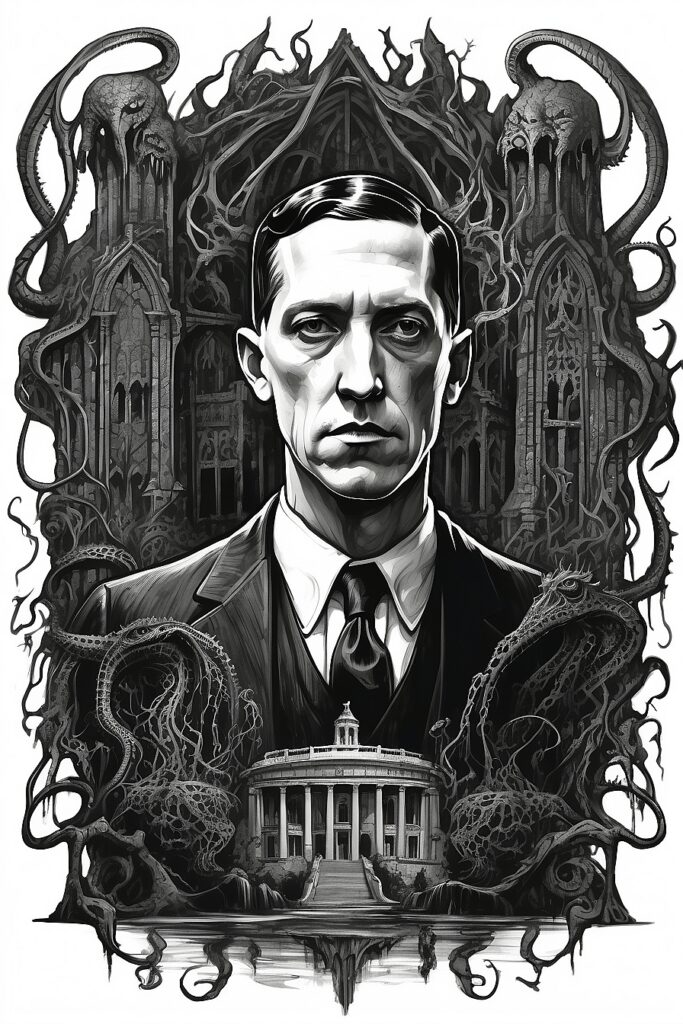
Guess what today is, dear reader.  Well, yeah, smart ass…it’s August 20th.  But do you know the significance?  Today we are celebrating the birth of a man who somehow managed to make tentacles terrifying long before Japanese pop culture turned them into something else entirely – though let’s be honest, Howard Phillips Lovecraft probably would have found that particular cultural evolution more horrifying than anything he ever conjured up in his fever dreams of non-Euclidean geometry and cities that shouldn’t exist but absolutely do in the space between your third drink and your fourth panic attack.

And yes, before you ask, I am already three whiskeys deep into this tribute, because how else does one properly commemorate the birthday of a guy who spent his entire literary career essentially screaming “THE UNIVERSE IS INDIFFERENT TO YOUR EXISTENCE AND ALSO THERE ARE FISH PEOPLE” at anyone within earshot?

The thing about Howard – and I’m calling him Howard because we’re birthday buddies now, cosmically speaking – is that he possessed this absolutely deranged ability to take the fundamental anxiety of existing in a universe that makes no sense whatsoever (which, let’s face it, it pretty much the human condition distilled to its purest essence) and transform it into prose so dense with subordinate clauses and baroque descriptive passages that reading it becomes its own kind of madness-inducing experience, a literary equivalent of staring directly into the abyss while the abyss files your taxes incorrectly and charges you late fees.

Dig, if you will (and you will, because I’m not giving you a choice here), the sheer audacity of a man who looked at the conventional horror tropes of his era – your garden variety ghosts, vampires, werewolves, things that go bump in the night and occasionally demand your lunch money – and said, “No, thank you, I’ll take cosmic insignificance with a side of tentacles and an extra serving of geometry that makes mathematicians weep.”  This is a writer who made angles scary.  Fucking angles!  Try explaining that so someone at a party.  Try explaining that to someone at a party.  I’ve tried, and it went something like this: “Well, you see, it’s not just any angle, it’s a non-Euclidean angle, which means it exists in ways that shouldn’t be possible, and also it’s probably connected to an ancient god-thing that regards humanity the way you regard the bacteria living in your kitchen sponge.”

But here’s where it gets deliciously absurd (and by delicious, I mean the kind of delicious that makes you questions your life choices while simultaneously reaching for another drink): Lovecraft, this master of cosmic horror, this architect of existential dread, was apparently afraid of air conditioning.  The man who created Cthulhu – a creature so cosmically horrifying that merely glimpsing it drives people insane – was reportedly intimidated by modern technology to the point where he probably would have had a complete nervous breakdown if confronted with a smartphone notification.

The irony is so thick you could cut it with a sword forged in the fires of Azathoth’s blind idiot piping (which, for the non-English majors, is basically Lovecraft’s way of saying “really, really hot”), and yet somehow this contradiction makes perfect sense when you consider that his entire literary project was essentially an elaborate exploration of the terror that comes from realizing you don’t understand the world you’re living in – which, when you think about it, is exactly how most of us feel when trying to figure out why our Wi-Fi stopped working or why our car is making that weird noise that definitely wasn’t there yesterday but night have been there for months and we just now noticed it because we finally turned off the radio.

And let’s talk about that prose style for a moment.  Because reading Lovecraft is like being trapped in a very erudite Nyquil dream where every sentence contains at least 17 dependent clauses, three semicolons, and at least one reference to something that sounds vaguely geological but is actually a sleeping god whose dreams are responsible for that recurring nightmare you have about showing up to work in your underwear, except in this case your underwear is made of cosmic horror and your workplace is a dimension that exists perpendicular to reality.

The man wrote sentences so labyrinthine that getting to the end of one feels like completing a particularly challenging obstacle course designed by someone who studied both architecture and madness with equal dedication, which is to say that by the time you reach the period, you’ve forgotten not only where the sentence began but also your own name, your social security number, and whether or not you remembered to feed your cat this morning (spoiler alert: you didn’t, and now your cat is plotting you demise with the same cold calculation that Nyarlathotep  brings to his role as the Crawling Chaos).

But here’s the thing that gets me, the thing that makes me raise my glass (again) to old Howard on this, his birthday: despite all the cosmic pessimism, despite the fundamental belief that humanity is essentially a cosmic accident that will be forgotten as soon as the starts align correctly and the Old Ones wake up from their Really Long Nap, despite the prose style that requires a graduate degree in recursive sentence structure just to parse – despite all of this, there’s something weirdly optimistic about the whole enterprise.

Because think about it: Lovecraft spent his entire career imagining horrors so vast and incomprehensible that they make our daily anxieties seem laughably insignificant by comparison.  Worried about your mortgage?  Well, at least Yog-Sothoth isn’t trying to manifest through your bathroom mirror.  Stressed about some deadline at work?  Could be worse…you could be a character in “The Colour Out of Space” watching your entire family slowly dissolve into something that probably violates several laws of physics.

It’s horror as therapy, cosmic dread as a form of perspective-checking, existential terror as a weird kind of comfort food for people who find regular comfort food insufficiently terrifying and also lacking in tentacles.

And yes, we have to acknowledge that Howard had some serious issues with, well, pretty much everyone who wasn’t a white Anglo-Saxon Protestant living in New England circa 1920, which is to say that his personal brand of cosmic horror came with a heft side order of terrestrial horror that was, frankly, way more horrifying than anything involving fish people or dream dimensions, because at least the fish people had the decency to be fictional.

But here’s where literature gets weird and complicated and sometimes beautiful in spite of itself: somehow, through the alchemy of time and cultural evolution and the strange way that stories take on lives of their own once they’re released into the world, Lovecraft’s cosmic nightmares have become a kind of shared language for anyone who’s ever felt overwhelmed by the sheer incomprehensible vastness of existence – which is to say, anyone who’s ever been alive and paying attention for more than five consecutive minutes.

His creatures and concepts have escaped their original context and become metaphors for everything from corporate bureaucracy to social media algorithms to the general feeling of being a tiny, confused biological entity trying to make sense of a universe that operates according to rules nobody bother to explain to you and also the rulebook is written in a language that doesn’t exist and even if it did exist, it would probably drive you insane just to read it.

So here’s to you, Howard Phillips Lovecraft, on this sweltering August 20th, your birthday and mine to celebrate: thank you for taking the fundamental weirdness of being alive and cranking it up to eleven, then breaking off the volume knob and feeding it to something with too many teeth and not enough regard for the laws of physics.

Thank you for showing us that sometimes the best way to deal with the incomprehensible vastness of existence is to imagine it’s even more incomprehensible and vastly more vast than we originally thought, and also it has tentacles and probably wants to eat our dreams.

Thank you for proving that you can write sentences so complex that they become their own form of cosmic horror, where the real monster isn’t some ancient god sleeping beneath the ocean but the dangling participle that’s been haunting your prose since paragraph three.

And thank you most of all for reminding us that in a universe full of Things That Should Not Be, sometimes the most radical act is to imagine Things That Really, Definitely Should Not Be, and then spend your entire life writing about them with the kind of obsessive dedication usually reserved for people who collect vintage bottle caps or know way too much about the genealogy of minor European nobility.

Happy birthday, you magnificent, troubled, utterly singular architect of nightmares.  May your non-Euclidean angles remain forever acute, may your Old Ones stay comfortably asleep for at least another few decades, and may your literary legacy continue to inspire writers to create sentences so grammatically complex that they require their own GPS system to navigate.

[Raises glass to the cosmic void, which probably isn’t paying attention but might be, which is somehow both more and less comforting than complete indifference]

Ph’nglui mglw’nath Cthulhu R’lyeh wgah’nagl fhtagn – and also, happy birthday, Howard.  Thanks for making the universe just a little bit weirder, which is exactly what it needed.

N.P.: “Cthulhu” – Gunship

August 16, 2025


So here we are again, dear reader, gathered around the literary campfire like a couple of degenerate scholars clutching our bottles of cheap wine and expired dreams, ready to sing the praises of the man who taught us that poetry doesn’t have to wear a tuxedo to a funeral – that sometimes it’s perfectly acceptable, even preferable, for verse to show up drunk, unshaven, and reeking of yesterday’s poor decisions.

Today marks the anniversary of August 16, 1920, when some cosmic chair-puller decided the world needed a man who would transform hangovers into haikus, who would alchemize the base metals of human failure into literary gold [Note: Honestly, dear reader, who else is going to give you alchemical references on a Saturday?  No one, that’s who.  Just sayin’.], and who would prove once and for all that you don’t need to be tortured by your art when life is perfectly willing to do the torturing for you.

Charles Bukowski – or Hank to those of us who like to pretend we knew him personally despite being more decades too late and several tax brackets too high – was the kind of writer who made the rest of us feel simultaneously inferior and relieved.  Inferior because, let’s face it, none of us will ever achieve that perfect synthesis of raw brutality and surprising tenderness that characterized his best work.  Relieved because thank God we don’t have to live through the kind of beautiful disaster that produced Post Office, Factotum, and Ham on Rye.

The man was essentially a one-person writing workshop for everyone who ever thought literature was too precious, too sanitized, too concerned with proper semicolon usage when what we really needed was someone to grab us by the literary lapels and scream, “Look, you pretentious fucks, this is what it actually feels like to be human!”  and he did this while maintaining a work ethic I can only dream about – thousands of poems, six novels, countless short stories, all produced while working dead-end jobs and drinking enough alcohol to float a small yacht.

But here’s where it gets complicated, because celebrating Bukowski means acknowledging the uncomfortable truth that separates the dilettantes from the devotees: the man wasn’t just playing at being a degenerate for artistic effect.  His was not some carefully cultivated persona designed to move units at Barnes & Noble.  This was authentic self-destruction, the Real Deal, unfiltered and unforgiving.  He lived the kind of life that most of us romanticize from the safety of our temperature-controlled offices, the kind of existence that looks glamorous in retrospect but probably felt like being slowly digested by a particularly sadistic snake.

What made Bukowski genuinely dangerous – and by dangerous I mean the kind of writer who forces you to reevaluate your entire relationship with both language and existence, as it did with me – was his refusal to apologize for any of it.  Not the drinking, not the gambling, not the brutal honesty about human relationships, not the way he could make a trip to the grocery store sound like a descent into one of Dante’s lesser-known circles of hell.  He wrote about ordinary humiliation with the kind of precision usually reserved for surgical procedures, and he did it without the safety net of ironic distance that most of us hide behind when confronting our own spectacular failures.

Let’s take Post Office, his semi-autobiographical novel about working for the United States Postal Service, which reads like Catch-22 if Joseph Heller had been raised on cheap beer and disastrous decisions instead of intellectual sophistication.  Bukowski transformed the mundane, banal bureaucratic nightmare of mail delivery into something approaching epic literature, proving that you don’t need to witness the fall of the Roman Empire to write about the human condition – sometimes all you need is a supervisor named Jonstone and the crushing realization that this job might not be temporary after all.

Or take his poetry, which achieved that rare feat of being simultaneously accessible and profound, like finding a twenty-dollar bill in a pair of jeans you were about to throw away.

Lines like “the free soul is rare, but you know it when you see it – basically because you feel good, very good, when you are near or with them” hit me hard, with the force of recognition.  The kind of truth that makes you stop whatever you’re doing and think, “Shit, this guy gets it.”

The irony, here, of course, which irony I suspect would have made Bukowski himself cackle 0 is that this man who spent his life running from respectability, who viewed literary establishment types with the same enthusiasm most people reserve for dental surgery, has becoming something approaching required reading in creative writing programs across the country.  College kids who’ve never worked a manual labor job in their lives are now studying his technique, analyzing his use of line breaks and discussing his “aesthetic choices” as if alcoholism were a literary device rather than a progressive disease.

But maybe that’s the point.  Maybe the ultimate joke is that Bukowski’s work survives not despite its rough edges but because of them, not because it fits neatly into academic categories but because it explodes them.  In an age where so much contemporary literature feels focus-grouped to death, workshopped into bland submission, and designed to offend absolutely no one while saying absolutely nothing, Bukowski’s voice still cuts through the noise like a rusty blade through a silk nightie.

So today, as we raise our glasses – and let’s be honest, we’re probably raising them anyway, Hank’s birthday or not – let’s toast the man who proved that literature doesn’t have to be polite to be powerful, that poetry can smell like cigarettes and still move mountains, and sometimes the most profound truths come from the people society has written off as the most hopeless cases.

Here’s to Charles Bukowski: patron saint of the perpetually hungover, laureate of the legitimately lost, and reminder that sometimes the most beautiful flowers grow in the ugliest soil.  The man who showed us that rock bottom has excellent Wi-Fi and that the view from the gutter includes some spectacular sunsets.

Happy birthday, you bastard.  Know that the bar is still open, the typewriter still works, and somewhere in California, the spirit of honest literature is still stumbling through the streets, looking for the next great story and probably needing a ride home.

N.P.: “Night Has Turned to Day” – Fantastic Negrito