Author Archives: Jayson Gallaway

Lock The Goddamn Clock!

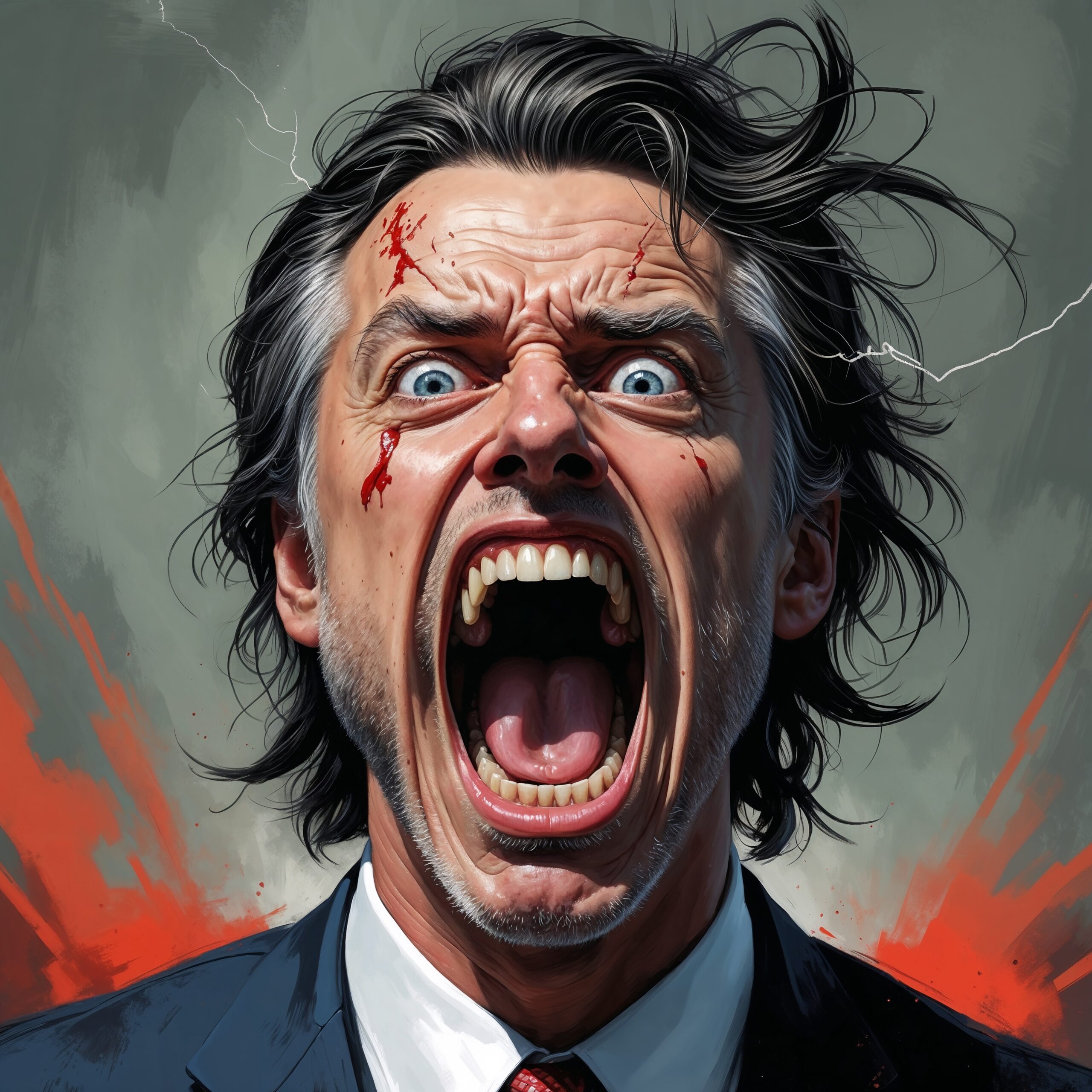
DEFCON 1 ALERT: The U.S. Must Obliterate Daylight Saving Time and Canonize Standard Time Before We’re All PERMANENTLY BONED!

Dear Mr. President, Mr. Speaker, Mr. Musk, and my fellow Americans,

Listen up—time’s hemorrhaging out of our collective sanity like a slashed artery, and we’re all complicit! Every spring, we grovel before the sadistic altar of Daylight Saving Time (DST), wrenching our clocks forward into a maelstrom of disruption that’d make Kafka blush. Some brain-dead bureaucrats and sun-worshipping yahoos are now howling to make DST permanent—a move so cataclysmically idiotic it’d hurl us into a dystopian abyss of jet-lagged despair. We’ve got ONE shot to stop this lunacy: the U.S. government must nuke DST into oblivion and anoint Standard Time as our eternal law. Here’re five reasons—etched in the blood of reason—why Standard Time is our only salvation, why permanent DST is a one-way ticket to Bedlam, and a screaming neon warning from our last disastrous flirtation with this madness in the ‘70s.

  1. Standard Time Is Our Circadian Lifeline—DST Is a Biological Guillotine
    Our meat-sacks are hardwired to groove with the sun’s primal pulse, and Standard Time’s the only rhythm that doesn’t spit in Mother Nature’s face. Permanent DST? It’d shove sunrises so far past 8 a.m. in winter you’d need a miner’s helmet to find your coffee. The American Academy of Sleep Medicine screams it loud: misaligned clocks jack up heart attacks, obesity, and suicidal ideation like some twisted pharmaceutical trial gone rogue. Standard Time cradles our pineal glands with morning light, syncing us to the cosmic beat. Permanent DST would fling us into a Stygian dawnless hell, scrambling our neurons into a quivering mess. You want to live like a vampire? I tried it for a few years back in the 90s, and the results, while interesting, weren’t anything approximating “good.”
  2. Morning Safety or a Slaughterhouse Dawn? Choose Now!
    Permanent DST fetishizes twilight picnics while tossing schoolkids and commuters into a pitch-black meat grinder. Winter mornings under DST mean buses rolling in darkness thicker than a Bukowski bender—National Highway Traffic Safety data shrieks that pedestrian deaths skyrocket when visibility’s nil. Standard Time floods dawn with light, shielding our kids from fenders and our roads from carnage. Trading that for an extra hour of evening glow is like swapping a fire extinguisher for a sparkler. DST’s a death warrant for the vulnerable, and I’m not signing it—are you?
  3. Productivity or a Zombified Workforce? The Economy’s Screaming!
    DST’s biannual clock-twist already kneecaps us, but permanent DST would be an economic cluster-bomb. Workers dragging their carcasses through coal-mine mornings lose focus faster than a politician dodging taxes. A 2016 study pegged DST’s chaos as a multi-billion-dollar anchor on GDP—now imagine that year-round! Standard Time’s steady hand aligns work with sunlight, juicing output like a triple espresso. Permanent DST’s late sunrises would gut morning industries—think farmers milking cows by flashlight, builders hammering in the dark. You want to tank the Dow Jones for a sunset beer? Hell no!
  4. Energy Savings? DST’s a Lie That’d Choke Mephistopheles!
    They peddled DST as an energy-saving messiah, but that’s a con job bigger than USAID. A 2008 Department of Energy report laughed it off—DST barely dents the grid, and permanent DST could spike usage as we blast heaters and floodlights to survive arctic mornings. Standard Time leans into natural light, slashing our electric bills like a samurai on speed. Locking in DST would burn resources faster than a Vegas casino, and for what? So we can barbecue at 9 p.m.? That’s not progress—that’s pyromania!
  5. Global Sync or a Pariah’s Clock? The World’s Watching!
    The planet’s sane nations—Japan, India—stick to Standard Time’s kin, keeping their clocks tight with solar noon like a Swiss watch. Permanent DST would make us temporal outcasts, our winter clocks so skewed we’d be calling London at 3 a.m. for a noon meeting. Trade, travel, diplomacy—all snarled in a jet-lag jungle. Standard Time keeps us locked into the global pulse, a metronome for civilization. DST’s a middle finger to Greenwich, and I’m not waving it!

The ‘70s Fiasco: A Screaming Ghost We Can’t Ignore
I’m old enough to remember 1974, when Nixon’s crew, drunk on oil-crisis panic, rammed through permanent DST like a runaway freight train. The result? A national nervous breakdown! Sunrises vanished till 9 a.m., kids trudged to school in a horror-flick fog, and traffic deaths spiked 10%—federal stats don’t lie. Parents rioted, approval ratings cratered to 30%, and Congress bailed by ‘75, tails between their legs. It wasn’t just bad policy; it was a societal knee-capping that left scars. We danced with that devil once, and the band played a dirge and then quit mid-song. Let’s not RSVP to the sequel!

This Is It—The Final Countdown!
Permanent DST isn’t a policy debate—it’s a five-alarm fire in our already-damaged collective psyche! It’s a health-wrecking, kid-endangering, economy-tanking, resource-burning, world-alienating catastrophe. Standard Time’s our lifeline, a beacon of sanity in this chrono-carnage. Congress needs to quit dithering and torch DST like a bad acid trip. Every second we delay, we’re flirting with disaster—our bodies, our kids, our nation deserve better than this temporal tyranny. I’m screaming into the void here, and you should be too!

Grab your phone, your keyboard, your carrier pigeon—bombard your reps NOW! Demand they annihilate Daylight Saving Time and crown Standard Time king before we’re all drowning in darkness. The clock’s ticking, and it’s wired to explode.  #LockTheClock!  #FDSL

N.P.: “Howlin’ at the Moon” – Blues Saraceno

April 11, 2025

Today the Dead Poets Society requests you pour some out for Kurt Vonnegut, who died April 11, 2007, just weeks after suffering brain injuries from a fall.  Vonnegut, the sardonic genius behind Slaughterhouse-Five, Cat’s Cradle, and Breakfast of Champions, was a master of blending dak humor with biting social commentary.  His books were Molotov cocktails thrown at conformity, war, and the absurdity of human existence.  His experience as a POW in Dresden during the 1945 firebombing shaped his anti-war stance, giving Slaughterhouse-Five its haunting, semi-autobiographical edge.  Vonnegut’s wit was a weapon, slicing through the hypocrisy of his time while making you laugh at the abyss.  He once said, “We are what we pretend to be, so we must be careful about what we pretend to be.”  Indeed.

Vonnegut’s death marked the end of an era for American literature, but his legacy was pretty badass.  He was a humanist who didn’t pull punches, calling out the establishment while championing the underdog.  His work inspired generations to question authority and find meaning in chaos, influencing everyone from counterculture rebels to modern satirists.  Vonnegut was a reminder of the power of a single voice to shake the world with nothing but a typewriter and some hard-earned cynicism.  So it goes.

N.P.: “Lachryma” – Ghost

April 10, 2025

Hot damn, dear reader!  One hundred years ago today, The Great Gatsby by F. Scott Fitzgerald was published, unleashing a literary bombshell that would come to define the Jazz Age and cement its place as one of the greatest American novels. Fitzgerald, a 28-year-old writer who’d already tasted fame with This Side of Paradise, poured his heart and disillusionment into this tale of Jay Gatsby, a self-made millionaire chasing the hollow American Dream through glitz, obsession, and heartbreak. Set on Long Island, the book skewers the excesses of the Roaring Twenties—think lavish parties, bootleg liquor, and the empty promises of wealth—while exposing the rot beneath the glamour. With its razor-sharp prose and haunting themes of class, love, and betrayal, Gatsby not only capture an era; it predicted its collapse, hitting shelves just four years before the 1929 stock market crash.

What makes this literary moment so badass is how Fitzgerald took a sledgehammer to the myth of upward mobility, showing the American Dream as a rigged game where dreamers like Gatsby get crushed. The book flopped commercially at first—selling fewer than 20,000 copies in its initial run—but its unflinching honesty and lyrical grit later earned it a spot in the literary canon. Fitzgerald’s own life mirrored Gatsby’s, full of excess and tragedy, which only adds to the book’s raw power. On April 10, 1925, a novel was born that still burns with relevance, forcing us to face the cost of chasing illusions in a world that doesn’t care.

In book news more closer to home, I have been barely keeping up with Mgmt’s audacious schedule, but just barely.  There is minimal wiggle room in the schedule, so I can’t really allow for any “off days,” like when I only got 2 hours sleep the night before, or I have to spend most of the day dealing with some huge non-writing emergent issue.  I do like daily routines, but I’m having to write early in the morning and/or into the night, so my old daily routine is just getting shot to hell.  One side effect to not having weekends is that I now, suddenly, have no idea what day of the week it is.

Anyway, I’m babbling…I need to get back to work.

N.P.: “Dangerous” – Royal Deluxe

April 9, 2025

I’ve been up since 04:00, trying to get a jump on today’s writing.  So far, so good.  I’ve grown to like these pre-dawn hours: all decent people are asleep, so lots of quiet and no interruptions.  Even those weenies on the east coast are still sleepily stumbling around their lofts looking for caffeine and trying to find a clean shirt to wear today.  Ha!  I’ve already put down 500 words.  Indeed.

In other badass literary news, on this day in 1859, a young Samuel Langhorne Clemens—better known as Mark Twain—earned his steamboat pilot’s license, a gritty milestone that would shape one of America’s literary giants.  This might seem like a trivial event to the uninitiated, but it was anything but.  At 23, Clemens had been apprenticing on the Mississippi River since 1857, learning the treacherous currents and hidden snags of the waterway while working on comic travel letters for the Keokuk Daily Post.  This wasn’t simply another day job for an aspiring writer – it was a baptism by fire into a rough-and-tumble world of river men, gamblers, and hustlers—a world that would later fuel the raw, unfiltered voice of classics like Adventures of Huckleberry Finn and Life on the Mississippi. Twain’s time as a pilot gave him an ear for the dialects and tall tales of the American South, grounding his work in a realism that cut through the era’s sentimental fluff.  He navigated a river that could kill you in a heartbeat, lived among hard-drinking, hard-living folks, and later used that lens to skewer hypocrisy, racism, and human folly with a pen as sharp as my newest switchblade. His steamboat days ended with the Civil War, but the swagger and insight he gained on April 9, 1859, informed the bulk of his work.

Damn…it’s now 06:30, that wretched sun is rising, and I just hit the first of what will probably many walls today.  A day like this, starting as early as it did, may warrant a Triple Mocha Frozen Coffee with an extra shot of espresso, or cocaine…whatever they have on hand.

N.P.: “Dayman” – RMB

Word of the Day – inchoate

Alright, my dearest literary renegades, it’s time to sharpen your quills and dive into today’s word of the day: inchoate. This is the perfect word for those of us who live for the messy, half-formed brilliance of a story still finding its fangs. So let us tear into it like a pack of wolves on a full moon.

Inchoate (adj): Just beginning, not fully formed, or still a chaotic mess—like a half-baked plan to rob a bank or the first draft of my novel where the characters are still figuring out who the hell they are. It’s the embryonic stage of something big, but right now, it’s a hot mess of potential, teetering on the edge of greatness or disaster.

This gem comes from the Latin inchoatus, the past participle of inchoare, meaning “to begin” or “to start.” Break it down further, and you’ve got in- (into) and cohum (the strap of a yoke), so it’s got this vibe of hitching up the oxen to start plowing a field—except the field’s a shitstorm and the oxen are drunk. It slunk into English in the 1530s, and it’s been the perfect word for describing anything that’s still a rough draft of itself ever since.

I’m a bit behind schedule today, so I don’t have the time or bandwidth to come up with a story that’ll make you snort-laugh into your whiskey.  So instead, you’ll get this:

Frankie “Two-Fingers” Malone, a small-time crook with big-time dreams, is holed up in a dive bar, scribbling his master plan on a cocktail napkin. He’s got a crew of misfits—Vinny the Snitch, Carla the Klepto, and a guy they just call “Mouth” because he never shuts up—huddled around him, trying to make sense of his inchoate scheme to steal the mayor’s prized taxidermy peacock. “So we, uh, bust in at midnight, right?” Frankie slurs, smudging the ink with his sweaty thumb. “Then Vinny… does somethin’ with a crowbar, and Carla, you… fuck, I dunno, grab the bird?” The crew stares at him, mouths agape, as Mouth mutters, “This plan’s so half-assed, it’s practically mooning us.” Frankie slams his fist on the table, spilling his beer. “It’s a work in progress, assholes—genius takes time!”

Sorry for such a hack job, dear reader, but I’ve got a big, hairy deliverable due tonight, and Mgmt is acting rather adamant about this deadline.

N.P.: “Century’s End” – Donald Fagen

April 7, 2025

Today’s a big day on the Dead Poets Society’s calendar.  On April 7, 1770, one of the founding members, William Wordsworth was born.  Alongside his buddy Samuel Taylor Coleridge, Wordsworth kicked of the Romantic movement in the 19th century, a rebellion against the stiff, rational ideals of the Enlightenment.  These guys weren’t just writing pretty poems about daffodils (though Wordsworth’s “I Wandered Lonely as a Cloud” is a banger) or tributes glorifying their patrons; they were shaking up the literary world with raw, emotional verse that put the individual’s experience front and center.  Their 1798 collection, Lyrical Ballads, was a middle finger to the stuff neoclassical norms  of the time, emphasizing imagination, the beauty of the natural world, and the power of language.  Which was pretty disruptive for a couple of poets in an era when most writers were obsessed with order and reason.

Wordsworth deserves much more attention here…he and Blake were surprisingly strong influences on me.  But I have writing of my own to get done…but happy birthday to Mr. Wordsworth.

N.P.: “Take Up The Fight” – Family Money

Word of the Day – somnolent

Happy Sunday, dear and I’m assuming by some of the mail I’ve received lately, occasionally drunk reader.  Today we crack open Uncle Jayson’s lexical grimoire and snort a line of pure lexicological blow.  Today’s word is somnolent, a slinky little adjective that slithers into your brain like a quaalude-laced dream.  As you likely know by now, dear reader, having endured the ruthless and brutal assault by the Woke on the entire English language, I no longer refer students to what-used-to-be trusted dictionaries for reliable definitions.  In fact it will soon be time to wage open war against the likes of Merriam-Webster, The OED, and the Cambridge Dictionary, and the rest of their pathetic ilk who became intentionally unable to define simple terms like “woman” for fear of angering The Mob.  But until I publish my own correct dictionary, we’re stuck with these losers.  So, according to the pussies over at Merriam-Webster, somnolent means “inclined to or heavy with sleep; drowsy,” but it’s got a deeper, slightly more sinister vibe – like the kind of torpor that hits you after a three-day bender on bootleg mezcal and existential dread.

Etymologically, it’s a highfalutin’ French-Latin mashup, from the Old French somnolent and Latin somnolentus, both rooted in somnus (sleep), the same root that gives us “insomnia” for all you night-owl freaks who can’t stop doomscrolling X at 3 a.m. It’s been narcotizing the English language since the 15th century, and it’s here to drag us into its hazy, half-conscious underworld.

I’m holed up in my favorite fleabag motel off Route 66, the kind of place where the roaches have unionized and the neon sign buzzes like a dying star. I’m three Red Bulls deep, trying to bang out a 5,000-word screed on the semiotics of reality TV for some pretentious lit mag, when my neighbor—a tweaked-out conspiracy theorist named Carl who claims he’s been probed by Martian IRS agents—starts pounding on the wall, screaming about chemtrails turning his goldfish into a communist. I’m somnolent as fuck, my brain a swamp of half-formed sentences and caffeine tremors, when Carl kicks down my door, buck-naked except for a tinfoil codpiece, waving a BB gun and yelling, “The lizard people are in the mini fridge!” I grab my laptop, hurl a half-eaten burrito at his head, and bolt into the desert night, leaving that motel hellhole to its own deranged circadian collapse. Moral of the story? Never trust a man who thinks his goldfish is reading Das Kapital.

That’s it, dear reader—somnolent, a word that captures the drooling edge of consciousness where nightmares and absurdity collide. Now go forth, wield it like a switchblade, and carve some chaos into your day.

N.P.: “Hot Stuff” – Blue October

Jayson Gallaway

April 5, 2025

07:23 – It’s Saturday morning and The Angst is upon me.  Been this way for a couple of days now.  Fortunately, it hasn’t festered into the debilitating Nebulous Dread yet.  And oh how I hate the Nebulous Dread.

13:56 – Ha!  Fuck the Angst.  It is no match for me once I’ve had a full night’s sleep, a Triple Mocha Frozen Coffee, and two or three delicious donuts.  Kiss my ass, Angst.

N.P.: “Ziggy Stardust” – Bauhaus

Word of the Day – diffident

Okay, dear reader, it’s time for your daily dose of linguistic debauchery. Today’s word is diffident.  I used it late last night in reference to some rather limp-wristed whiskey.

Diffident (adj) means shy, reserved, or lacking in self-confidence—like a wallflower at an orgy who’s too scared to grab the lube.

This little gem comes from the Latin diffidere, meaning “to mistrust” or “to lack faith,” from dis- (apart) and fidere (to trust). Picture some toga-clad Roman stammering in the Forum, too chickenshit to ask Cleopatra for a quickie. It slunk into English in the 15th century, and we’ve been using it to describe spineless bastards ever since.

So there’s this diffident fucker, Larry, at the bar—sweaty palms, shifty eyes, the whole pathetic package. He’s been eyeballing this tattooed goddess with a rack like a Renaissance painting for an hour, but does he make a move? Hell no. He’s over there nursing his fifth PBR, muttering to himself about how she’d probably rather bang a cactus than his scrawny ass. Finally, his buddy Dave—six-foot-four and built like a Viking on a bender—drags him over, slaps him on the back, and yells, “Oi, Sheila, this shy little boy wants to buy you a shot!” Sheila smirks, downs the tequila, and says, “Grow some balls, Larry, and I might let you lick the salt off me next time.”

Don’t be Larry, dear reader.  Fortune favors the bold, and so does Sheila and her ilk.  And that’s it—diffident: the word for when your spine’s on vacation and your libido’s crying in the corner.

N.P.: “She Is Beautiful” – Andrew W.K.

April 2, 2025

It’s been a challenging 24 hours, beloved reader.  Sparring last night, I got punched in the mouth.  I totally had it coming – I dropped my guard whilst attempting a question mark kick and got smacked.  It wasn’t a big deal, but it left me with a pretty sizable fat lip today.  I don’t know if anybody noticed, and don’t particularly care, but I knew it was there and it pissed me off.  Then last night I could not fall asleep, for no good reason at all.  I maybe got two hours of sleep, then had to get up to deal with an overly full day of what seemed mostly like bullshit.  Maybe I was just cranky from too little sleep, but my fuse was definitely short today.  When I finally got back to the Safe House, I was completely exhausted, but still had a 2000-word deliverable due to Mgmt, which, badass that I am, I somehow managed to complete.  I’m pretty completely spent, and I should by rights just fucking collapse at this point, but there are still a couple things I have to do.  One is to sign for a big weird delivery that is “supposed to arrive before midnight.”  The other is some international Dead Poets business, so let’s get to it while I’m still somewhat coherent.

First up is a big happy birthday to Hans Christian Andersen who was born on this day in 1805 in Odense, Denmark.  Those of you who were brought up before the last two or three snowflake generations will undoubtedly remember Uncle Hans for his fairy tales.  Those of you who are unfortunate snowflakes, don’t let the fairy-tale label fool you – this dude was not spinning fluffy bedtime stories.  Take The Little Mermaid: she doesn’t get the prince, loses her voice, and ends up as sea foam after contemplating murder.  Or The Snow Queen with its icy, ruthless edge.  Andersen’s stories are dark, poetic gut punches, born from a life of poverty and rejection.  He clawed his way up, and his pen bled defiance.  My man!

Another happy birthday to Emile Zola, born in Paris on this day in 1840.  This French titan used his pen to wage war on hypocrisy and injustice.  His Germinal (1885) dives into the brutal lives of coal miners, exposing exploitation with realism so vivid it still packs a punch today.  Kinda like the one that gave me the fat lip last night.  His “J’Accuse…!” letter in 1898, defending Alfred Dreyfus, got him convicted of libel and forced him to flee France.  He risked it all for truth, which more than warrants a permanent place on the D.P.S. Honor Roll.

Finally, we turn to Japan, where on April 2, 1971, Yukio Mishima’s The Sea of Fertility tetralogy wrapped up posthumously with The Decay of the Angel.  Mishima was an absolute force obsessed with beauty, honor, and Japan’s lost soul.  After finishing this epic, he tried to overthrow the government in a failed coup and committed seppuku in 1970.  The final book hit the shelves months later, a haunting capstone to a life lived on the edge.  More than just literature, it’s a samurai’s last stand.   Goddamn right.

N.P.: “Purple Haze 2025” – Frank Palangi, Henry Chauhan