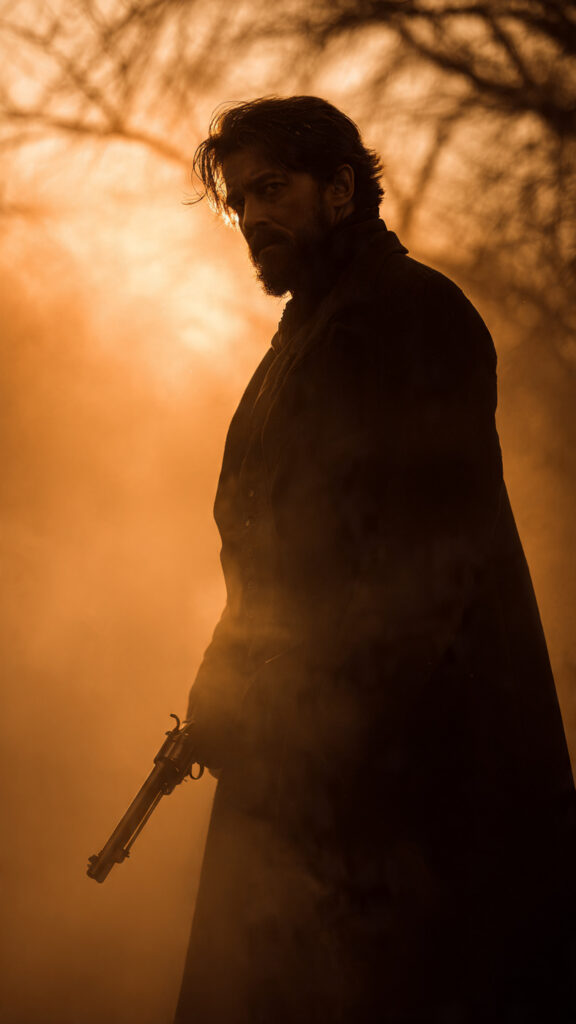
The beauty of the duel in its ability to instantly curate the gene pool of the literati. It forces a man to weigh his adjectives against the literal weight of his own mortality.
Let’s be honest about the current state of our collective national discourse, which has devolved into a fetid mess of tepid, womanly, high-pitched shrieking – a digital playground where the most egregious offense is a “ratio” and the primary weapon of choice is the anonymous report button. We are living in an era of unprecedented, world-class cowardice. The pussificaation of the modern man – and I use that term with a clinical, diagnostic precision – has led to a society where any low-rent hack can spout vitriol from behind a glowing rectangle without the slightest existential fear of a physical accounting.
We need more duels. People need to be far more afraid of being shot than they presently are. There, I said it.
The fundamental problem with the contemporary “cancel culture” ecosystem is its inherent lack of skin in the game. It is a chickenshit, passive-aggressive avenue for the weak to tear down the bold. In the 19th century, if you publicly maligned a man’s character or suggested his prose was the literary equivalent of a syphilitic fever dream, you didn’t just wait for a notification: you waited for a knock at the door from a “second” holding a box of polished mahogany.
Take, for example, the high-stakes, lead-based feedback loop of February 16, 1821. John Scott (of whom the dear yet historically benighted has undoubtedly never heard), editor of The London Magazine, was a man who understood the recursive, high-velocity nature of accountability. He had spent months engaging in a relentless, textually dense assault on the “Blackwood’s” crowd (you don’t know who the hell they were either) – specifically John Gibson Lockhart (him neither), a man whose talent for the literary hatchet job was matched only by his refusal to be “subtweeted” into submission. Confused? I know. Suffice it to say, there was a lot a static between a couple of editors.
When the friction between these two reached a critical, thermodynamic mass, they didn’t exchange snarky GIFs. They didn’t start a Change.org petition. They recognized that some disagreements are so fundamental, so deeply rooted in the fiber of one’s honor, that they can only be resolved by the ballistic trajectory of a lead projectile.
The Protocol of Honor (A Lost Art)
The Challenge: A direct, masculine confrontation with pistols. No “blocking,” no “muting.”
The Field: Chalk Farm at moonlight. The ultimate IRL meeting.
The Result: Scott took a bullet to the guy from Jonathan Christie (Lockhart’s proxy).
The Virtue of Consequence
There is a profound, almost spiritual respectability in the way these men operated. To stand at twelve paces and stare down a rifled barrel is the antithesis of the modern penchant for digital sabotage. It is a rejection of the “refreshing for likes” dopamine loop in favor of the adrenaline-fueled of the duel.
When you know that lipping off to the wrong man might result in a surgical extraction of your liver via a dueling pistol, you tend to choose your words with a level of care that is currently nonexistent in our low-T, high-speed internet culture. Scott died, yes – fatally wounded in a display of peak 19th-century bassassery – but he died with a level of dignity that a thousand “canceled” TikTokers could never hope to achieve.
We have traded the pistol for the post, and in doing so, we have sacrificed the only thing that kept the peace: fear. A society that refuses to fight is a society that deserves to be bored to death by its own mediocrity. Give me the smoke-filled field at dawn over a passive-aggressive thread any day of the week.
So the next time you feel brave enough to launch a character assassination from the safety of your phone, ask yourself: would you pull the trigger at dawn, face-to-face with your target? Because that, dear reader, is what it means to stand behind your words.
N.P.: “Mercy” – The Native Howl
Somebody thought they could leave a comment!